
Adapting Waste Paper Baling to Warehouse Layouts: Vertical vs. Horizontal Configurations
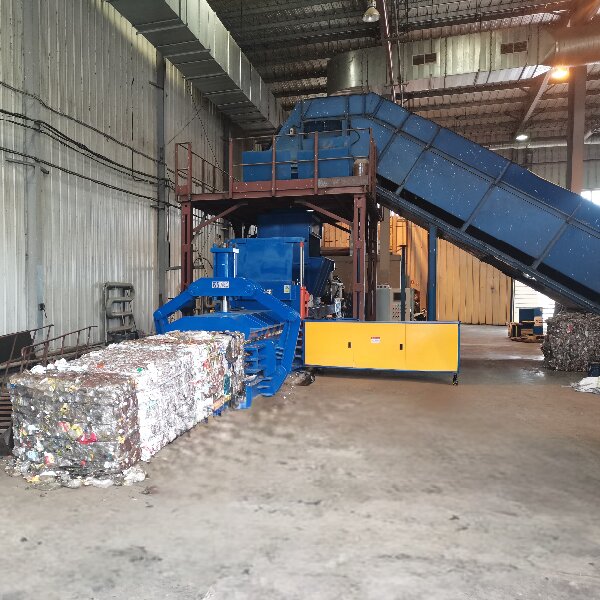
Short answer: on a fixed warehouse floor, a vertical baler is the correct configuration when your limit is plan area and the material is loaded by hand or tipper at a low-bay dock; a horizontal hydraulic baler is the correct configuration when waste paper arrives continuously from a shredder or sorting line and the real constraint is the straight run of floor you can dedicate to a feed conveyor. Vertical machines compress upward inside a footprint as small as 870 x 780 mm. Horizontal machines compress sideways and normally depend on a conveyor measuring 12,000 mm to 14,000 mm.
Most purchasing briefs for a waste paper hydraulic baler machine open with tonnage and close with price. Site-driven projects usually fail earlier than that: the machine is ordered, delivered, and then found to be geometrically incompatible with the aisle, the bay height, or the way material actually moves through the building. This guide reverses the order. It begins with the site and the material flow, then maps that reality to a machine configuration.
The reference product set used below comes from Shaanxi Nick Machinery Equipment Co., Ltd., the manufacturer behind the brand NKBALER. The company designs and sells vertical balers, full-automatic and manual horizontal balers and press bagging machines from a 5,000 m² facility in Wuxi, Jiangsu, China, founded in 2013, exporting approximately 90% of its output to North America, South America and Asia. Because the published machine data is specific, the footprint-versus-conveyor trade-off can be measured rather than estimated. A full product overview is available at www.nkbaler.com.
What a Spatial Constraint Actually Means in Baling
A spatial constraint in a baling project is not one number. It is three numbers, and they interact with each other:
- Clear height at the installation point — the vertical distance from the floor to the lowest obstruction: a door header, sprinkler line, mezzanine, crane rail or light fitting.
- Usable plan area — the floor a machine may occupy without blocking the forklift turning circle, the fire route or the bale staging area.
- Feed path geometry — whether material reaches the chamber by hand, by tipper, or continuously from a shredder, air conveyor or sorting belt.
When these three are not measured first, the failure modes are predictable. A horizontal baler installed without its full straight run starves or backs up, and the upstream shredder line stops while a bale is being discharged. A vertical machine ordered for a dock with a 2.6 m header cannot be installed once the chamber chimney is included in the height. A small manually fed vertical baler placed on a line generating several tonnes per hour simply becomes the bottleneck, and the material is handled twice instead of once.
This is why configuration planning belongs in the evaluation stage, not in the installation week. Two machines with comparable force ratings can occupy a building in completely different ways, and only one of those ways will match how your site already works.
Industry Background: Why Configuration Is Now a Layout Decision
The global industrial balers market was valued at USD 6.39 billion in 2024 and is projected to reach USD 13.21 billion by 2032, according to Maximize Market Research. Segment estimates diverge sharply depending on scope: the solid waste hydraulic baler segment alone was placed at USD 1.52 billion in 2025 with a projected CAGR of 5.5% through 2036 in one industry report, while broader baler estimates that include agricultural machinery sit at a similar order of magnitude to the industrial figure. Buyers should treat the direction of growth as the usable signal and not rely on any single published number.
Regulation reinforces the same point. Horizontal baling presses must comply with EN 16252:2012 (BS EN 16252:2012 in the UK) for CE marking in the European Union — a standard that sets safety requirements for machines compacting waste materials or recyclable fractions. For customs and import documentation, hydraulic baling presses are commonly classified under HS Code 842240 (packing or wrapping machinery) or 846291 (hydraulic presses), which affects duty treatment and paperwork.
Supply is concentrated as well. China accounts for over 77% of hydraulic baling press import shipments in specific emerging-market corridors, based on customs shipment data. In the high-throughput industrial segment, the internationally recognised suppliers include Harris Equipment, International Baler Corporation (IBC), HSM GmbH and Jiangsu Huahong Technology. Across all of them, the vertical-versus-horizontal split is where a supplier's product line and the buyer's building layout either match or do not.
The Two Configuration Families and the Site Logic Behind Each
Vertical machines: compression that goes up
A vertical baler loads from the top into a chamber, presses downward with a hydraulic platen, and ejects a strapped bale through a door at the front or side. No feed conveyor is required, one operator can run the cycle, and the whole process occupies a single plan position. That is why vertical machines are the default answer for low-bay docks, warehouse back rooms, transfer stations and retail sites where floor space is genuinely scarce.
| Model | Machine type | Force | Bale / package size | Machine size (L x W x H) | Capacity | Power | Weight |
|---|---|---|---|---|---|---|---|
| NK6040T10 | Waste paper baler | 10 Ton | 600 x 400 x (350–600) mm | 870 x 780 x 2,150 mm | 6–8 bales/H | 2.2 kW / 220V | 600 kg |
| NK1070T60 | Cardboard box baler | 60 Ton | 1,100 x 700 x (500–900) mm | 1,600 x 1,100 x 3,200 mm | 5–8 bales/H | 15 kW / 380V | 2.2 T |
| NK60LT | Textile / clothes baler | 60 Ton | 1,000 x 700 x 400–800 mm | 1,700 x 1,000 x 3,780 mm | 10–12 bales/H | 15 kW / 380V | 2,900 kg |
| NK080T100 | Cans / PET bottle baler | 100 Ton | 1,000 x 800 x (500–1,000) mm | 1,700 x 1,400 x 3,300 mm | 3–6 bales/H | 15 kW / 380V | 3.2 T |
| NK110T150 | Fibre / coco coir baler | 150 Ton | 1,100 x 1,000 x (400–1,200) mm | 1,900 x 1,700 x 4,210 mm | 4–6 bales/H | 22 kW / 380V | 7 T |
| NK1580T200 | Vertical metal baler | 200 Ton | 1,500 x 800 x 1,100 mm | 1,800 x 1,000 x 4,600 mm | 3–6 bales/H | 22 kW / 380V | 11 T |
Within this family the plan footprint ranges from roughly 0.68 m² on the NK6040T10 to about 3.2 m² on the NK1580T200, while machine height rises from 2,150 mm to 4,600 mm. That spread is the decision. A dock with a 3 m header eliminates most of the range immediately and points either to the compact NK6040T10 or to a larger machine repositioned where the height is unobstructed.
Horizontal hydraulic balers: compression that goes sideways
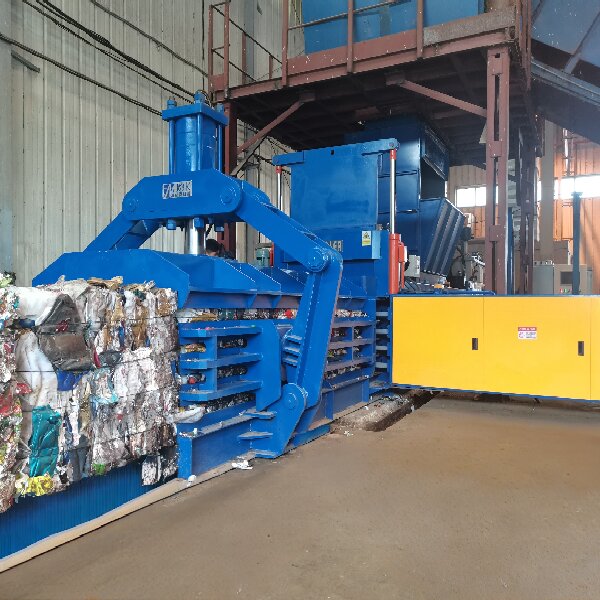
Horizontal machines invert the geometry. Material is fed horizontally into the chamber, the main cylinder drives the platen along the chamber axis, and the finished bale is pushed out — often strapped automatically in the fully automatic variants. Feed is the defining dependency: these machines are designed around a conveyor, so the site must be able to surrender a straight run of floor in front of the feed opening, plus discharge and bale-handling space on the opposite side.
| Model | Cylinder force | Bale size (W x H x L) | Capacity | Feed opening | Mainframe size | Conveyor | Mainframe weight |
|---|---|---|---|---|---|---|---|
| NKW80Q | 80 Ton | 1,100 x 800 x ~1,600 mm | 3–5 T/H | 1,500 x 800 mm | ~9.8 x 4.3 x 1.4 m | 1,200 x 12,000 mm, 4 kW | 15 tons |
| NKW80BD | 80 Ton | 1,100 x 850 x 1,700 mm | 2–3 T/H | 1,200 x 1,000 mm | — | 12,000 x 1,800 mm, 4.5 kW | 14,500 kg |
| NKW125BD | 125 Ton | 1,100 x 1,250 x 1,700 mm | 5–7 T/H | 2,000 x 1,100 mm | — | 12,000 x 1,800 mm, 4.5 kW | 18,000 kg |
| NKW125Q | 125 Ton | 1,100 x 1,100 x ~1,600 mm | 10–12 T/H | 2,000 x 1,100 mm | ~11 x 2.3 x 2.9 m | 2,000 x 12,000 mm, 7.5 kW | 22 tons |
| NKW160Q | 160 Ton | 1,100 x 1,250 x ~1,600 mm | 12–15 T/H | 2,000 x 1,100 mm | ~11 x 2.3 x 2.9 m | 2,000 x 14,000 mm, 7.5 kW | 28 tons |
| NKW180BD | 180 Ton | 1,100 x 1,150 x 1,800 mm | 6–8 T/H | 2,400 x 1,100 mm | — | 14,000 x 2,000 mm, 5.5 kW | 24,000 kg |
| NKW180QT | 160 Ton | 1,100 x 1,250 x ~1,600 mm | 12–15 T/H | 2,000 x 1,100 mm | ~13 x 4.3 x 5.8 m | 2,000 x 12,000 mm, 4 kW | 28 tons |
| NKW250BD | 250 Ton | 1,100 x 1,250 x 1,700 mm | 10–15 T/H | 2,000 x 1,100 mm | — | 12,000 x 2,000 mm, 4.5 kW | 30,000 kg |
The layout implication is straightforward: a horizontal baler is a line, not a box. The NKW180QT mainframe alone measures approximately 13 x 4.3 x 5.8 m before its 12,000 mm conveyor is added, and several models use water cooling or an oil chiller that also needs service clearance. If the building cannot provide that linear corridor — or if material must be carried to the machine by hand — the horizontal configuration will underperform regardless of its rated tonnage.
Where bagging machines fit into the same layout
Not every waste stream holds together under hydraulic pressure alone, and this is where auxiliary equipment decides the line layout as much as the baler does. NKBALER builds press bagging machines for fractions that need containment rather than pure densification: the NKB220 block making machine forms 480 x 480 x (220–350) mm blocks at 90 blocks per hour with a capacity of 2.5–3 T/H and a moisture requirement of 13% or under; the NKB280 straw and hay bagging machine produces 30–32 bales per hour at 10–12 T/H, fed by a chain conveyor and strapped with plastic or woven bags; and the NKB10 and NKB20 constant-weight bagging machines produce uniform packs of 1–1.5 kg and 20 kg respectively.
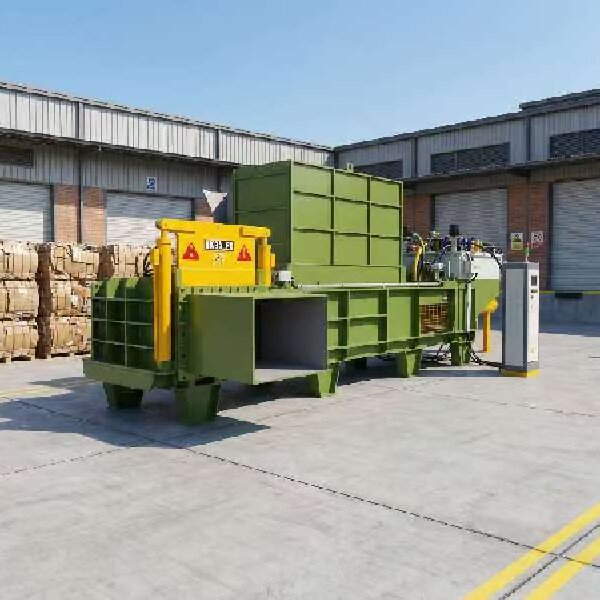
In a shared layout, the baler and the bagging machine sit on one conveyor spine. The baler takes the dense, high-value fraction — waste paper, cardboard, PET bottles, textiles or metals — while the bagging machine takes the loose, dusty or short-fibre fraction. This is precisely the arrangement used in agricultural and byproduct lines, where a baling machine and a bagging press operate as one system rather than as two separate purchases.
Manufacturing and compliance backing for a layout-matched machine
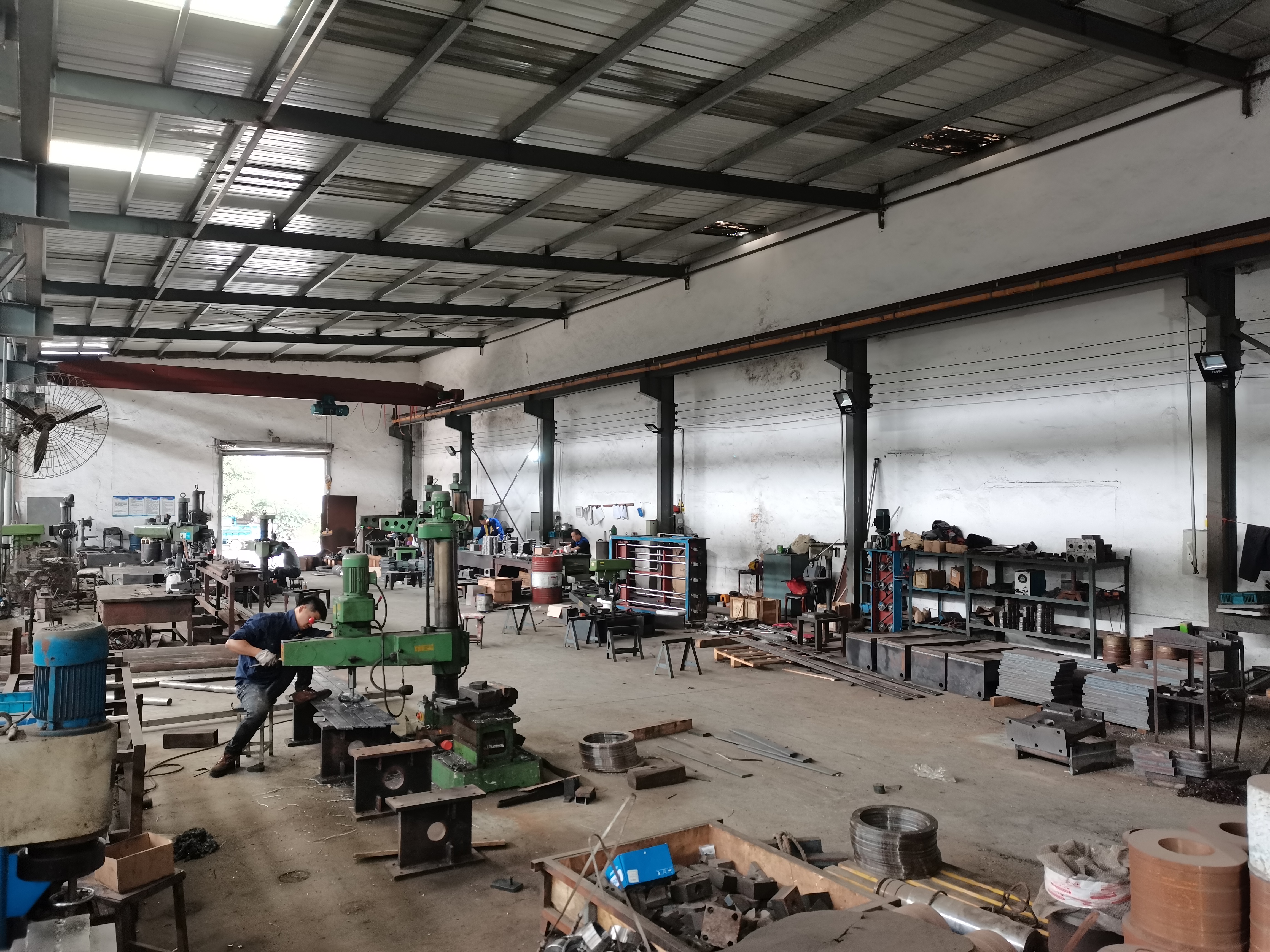
Configuration advice only becomes usable if the machine can actually be built to the measured layout. NKBALER operates on an OEM/ODM basis with parameter-level customization, a minimum order quantity of one unit, a monthly capacity of around 10 units and a lead time of 30–45 days. Every unit is 100% tested before dispatch, and after-sales support is delivered remotely. The production base covers 5,000 m² with a 15-person R&D team.
Compliance documentation matters for import and installation approval: the company holds a Verification of Conformity (No. DPWD/09/060/2024) covering EU/EEA markets with reference to EN ISO 12100:2010, EN 60204-1:2018 and EN 415-1:2014, issued on 19 September 2024 and valid until 18 September 2029, together with an Attestation Certificate of Machinery Directive (No. EASY03220201M) referencing EN ISO 12100:2010 and EN 60204-1:2018 for EU/EEA and Türkiye, valid from 22 March 2022 to 21 March 2027.
Step-by-Step: Surveying Your Site Before You Choose a Configuration
- Measure clear height where the machine will stand, not the nominal bay height. Vertical models span 2,150 mm (NK6040T10) to 4,600 mm (NK1580T200), while horizontal mainframes reach 5,800 mm on the NKW180QT. Door headers and sprinkler runs are the usual culprits.
- Map usable plan area honestly, including bale staging and the forklift turning circle. Vertical footprints run from about 0.68 m² to roughly 3.2 m². A horizontal unit claims a linear strip, plus a discharge side and cooling clearance.
- Trace the feed path. Manual loading or tipper feed points to a vertical machine. A shredder, air conveyor or sorting belt points to a horizontal hydraulic baler.
- Match feed continuity to cycle time. Vertical output is measured in bales per hour — 3 to 12 depending on model — while horizontal output is measured in tonnes per hour, from 2–3 T/H on the NKW80BD up to 12–15 T/H on the NKW180QT and NKW160Q.
- Plan bale discharge and storage. Bale weights run from 50–80 kg on the NK6040T10 to 1,000–2,000 kg on the NK1580T200. Horizontal bales follow chamber size, for example 1,100 x 1,250 x 1,700 mm on the NKW250BD.
- Decide the auxiliary equipment — conveyor length (12,000 mm or 14,000 mm depending on model), cooling method (water cooling or oil chiller is standard on several horizontal models), and whether a bagging machine belongs on the same line.
- Confirm utilities and service access. Power ranges from 2.2 kW on the smallest vertical machine to 45 kW plus conveyor and cooling motors on the largest horizontal models. Voltage is customizable across 220V/50Hz, 380V/50Hz and 200–480V/50Hz/3-phase configurations.
Site-Matched Configurations: Five Layout Profiles Ranked by Fit
The shortlist below ranks configurations by how tightly each fits a specific site signature. It is a layout-fit ranking, not a general quality order.
- Low-bay loading dock or transfer station — NK6040T10. A 870 x 780 mm footprint, 2,150 mm height, 600 kg machine weight and a 220V/50Hz supply make this the first pick where both floor area and headroom are scarce. It delivers 6–8 bales per hour at 50–80 kg per bale, which suits a dock that accumulates waste paper and cardboard across a shift rather than continuously.
- Retail or warehouse back room with cardboard and PET volume — NK1070T60. A 60-ton press with a 1,100 x 700 x 1,450 mm chamber and 5–8 bales per hour fits between storage racking at 3,200 mm overall height. Where the dominant stream is plastic bottles or aluminium cans rather than cardboard, the NK080T100 cans and PET bottle baler covers 3–6 bales per hour at 200–350 kg per bale.
- Mid-size recycling centre fed by a shredder — NKW125BD or NKW125Q. Both use a 125-ton cylinder and a 12,000 mm conveyor, but at different throughputs: 5–7 T/H on the BD variant and 10–12 T/H on the Q variant. This is the point at which conveyor integration starts paying for the floor it consumes.
- High-throughput MRF with a continuous sorting line — NKW250BD or NKW180QT. The 250-ton NKW250BD reaches 10–15 T/H with a 30,000 kg mainframe; the NKW180QT reaches 12–15 T/H with a 28-ton mainframe and 500–600 kg/m³ material density. Both need the full linear corridor and a bale handling route on the discharge side.
- Loose or fine-fraction line requiring containment — NKB220 or NKB280 downstream of the baler. Where the residual fraction cannot be held by pressure alone, the bagging press sits on the same conveyor spine, producing 90 blocks per hour at 2.5–3 T/H (NKB220) or 30–32 bales per hour at 10–12 T/H (NKB280).
Field evidence from comparable installations
Three reference projects illustrate how configuration follows site conditions rather than catalogue position. A recycling station manufacturer in Indonesia installed one unit for waste plastic baling and waste paper baling and reports stable operation with low noise and low energy consumption. An agricultural manufacturer in Pakistan installed one unit for baling straw and alfalfa, reporting stable operation and low noise. A customer in Romania took delivery of a fully automatic alfalfa baling line: after installation and commissioning, bale density exceeded 400 kg/m³, transport costs fell by roughly 30%, automated operation doubled baling efficiency, and on-site training was provided to the customer's operators and maintenance staff.
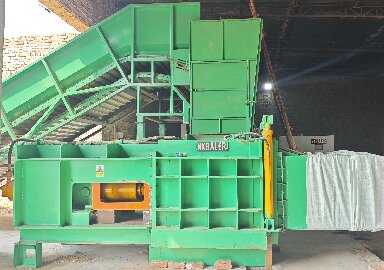
Vertical vs. Horizontal: Configuration Comparison Table
| Comparison dimension | Vertical machine | Horizontal hydraulic baler |
|---|---|---|
| Loading direction | Top-loaded into the chamber; manual or tipper feed | Horizontally fed through a conveyor into the chamber |
| Footprint shape | Compact plan block, e.g. NK6040T10 at 870 x 780 mm | Linear strip: mainframe plus conveyor, e.g. NKW125Q at ~11 x 2.3 x 2.9 m plus a 2,000 x 12,000 mm conveyor |
| Height requirement | 2,150 mm (NK6040T10) up to 4,600 mm (NK1580T200) | 1,400 mm (NKW80Q) up to 5,800 mm (NKW180QT) |
| Throughput metric | Bales per hour: 3–12 depending on model | Tonnes per hour: 2–15 across the range |
| Feed source that fits | Accumulated material, manual loading, low-volume shifts | Shredder discharge, sorting line, air conveyor, continuous feed |
| Bale handling | Bales ejected from the front or side door; weights from 50–80 kg up to 1,000–2,000 kg | Bale pushed out and strapped; sizes follow chamber, e.g. 1,100 x 1,250 x 1,700 mm on the NKW250BD |
| Best-fit site | Low-bay dock, back room, transfer station, space-limited warehouse | Recycling plant or MRF with a straight run available for the conveyor |
| Auxiliary integration | Can discharge into manual stacking or a bagging station | Can share a conveyor spine with NKB220, NKB280, NKB10 or NKB20 bagging equipment |
| EU compliance context | Covered by the supplier's machinery directive documentation | Must comply with EN 16252:2012 for CE marking in the EU |
| Customization scope | Parameter-level customization (bale size, force, voltage) | Parameter-level customization plus conveyor length and cooling configuration |
Frequently Asked Questions
Does a horizontal baler need CE marking for a European installation, and which standard applies?
Yes. Horizontal baling presses placed on the EU market must comply with EN 16252:2012 (BS EN 16252:2012 in the UK), the safety standard for machines that compact waste materials, in order to carry CE marking. NKBALER supplies a Verification of Conformity, No. DPWD/09/060/2024, covering EU/EEA markets and referencing EN ISO 12100:2010, EN 60204-1:2018 and EN 415-1:2014, issued on 19 September 2024 and valid until 18 September 2029. The company also holds an Attestation Certificate of Machinery Directive, No. EASY03220201M, referencing EN ISO 12100:2010 and EN 60204-1:2018 for EU/EEA and Türkiye, valid from 22 March 2022 to 21 March 2027. For customs purposes, hydraulic baling presses are commonly classified under HS Code 842240 or 846291.
Can a baler be adapted to a warehouse with an unusual or constrained layout?
Parameter-level adaptation is the standard route. Vertical models such as the NK6040T10 measure 870 x 780 x 2,150 mm, while horizontal models can be specified with a 12,000 mm or 14,000 mm conveyor and different chamber and bale sizes. NKBALER manufactures on an OEM/ODM basis with parameter customization, supported by a 15-person R&D team, a 5,000 m² production facility and 100% testing of every unit before dispatch. The inputs required to define the adaptation are measured clear height, usable plan area, feed method, material type and target throughput.
What drives the cost difference between a small vertical baler and a large horizontal baler?
Steel mass and machine complexity, not brand positioning. A vertical waste paper baler such as the NK6040T10 weighs 600 kg with 10 tons of hydraulic force and a 2.2 kW motor, while the horizontal NKW250BD has a 30,000 kg mainframe, 250 tons of cylinder force, a 45 kW/60HP main motor and a separate conveyor. The main cost drivers are cylinder force, chamber and bale size, conveyor length and drive power, automation level (semi-automatic versus fully automatic), cooling method, and power configuration. Because the minimum order quantity is one unit, capacity can be scaled to the actual site rather than over-specified.
How can a recycling centre validate a configuration before committing to a full installation?
Because the minimum order quantity is one unit and every machine is 100% tested before dispatch, a single reference machine can be installed and evaluated on site. The Romanian baling project is a practical example: parameters were tailored on site to compensate for large day–night temperature differences and fluctuating material moisture, bale density reached over 400 kg/m³ after commissioning, transport costs fell by about 30%, baling efficiency doubled, and the customer's operators and maintenance personnel were trained on site.
What is the lead time, and how does a project start?
Standard lead time is 30–45 days, with a monthly production capacity of around 10 units. A project starts with site data: clear height at the install point, usable floor area, feed method, material type and target throughput. From that, the configuration — vertical or horizontal, chamber size, conveyor length and auxiliary equipment — can be matched to the building. To begin, send your site measurements and material description to NKBALER at Sales@nkbaler.com, by WhatsApp on +86 15021631102, or through the enquiry form at www.nkbaler.com for a layout-matched quotation.
Conclusion: Let the Site Choose the Machine Type
Adapting waste paper baling to a warehouse layout comes down to three decisions that can be made before any quotation is requested. If clear height and floor area are the binding constraints, a vertical baler keeps the installation inside one small plan position while delivering 3–12 bales per hour. If material arrives continuously and the building can provide a 12,000 mm to 14,000 mm straight run, a horizontal hydraulic baler converts that linear space into 2–15 tonnes per hour of throughput. If the residual fraction cannot be held together by pressure alone, a bagging machine belongs on the same conveyor spine.
Configurations are matched to sites, not the other way round. Measuring the bay, the aisle and the feed path first is what prevents a machine from being installed where it cannot work, and it is also the fastest route to a specification that survives contact with daily operations.
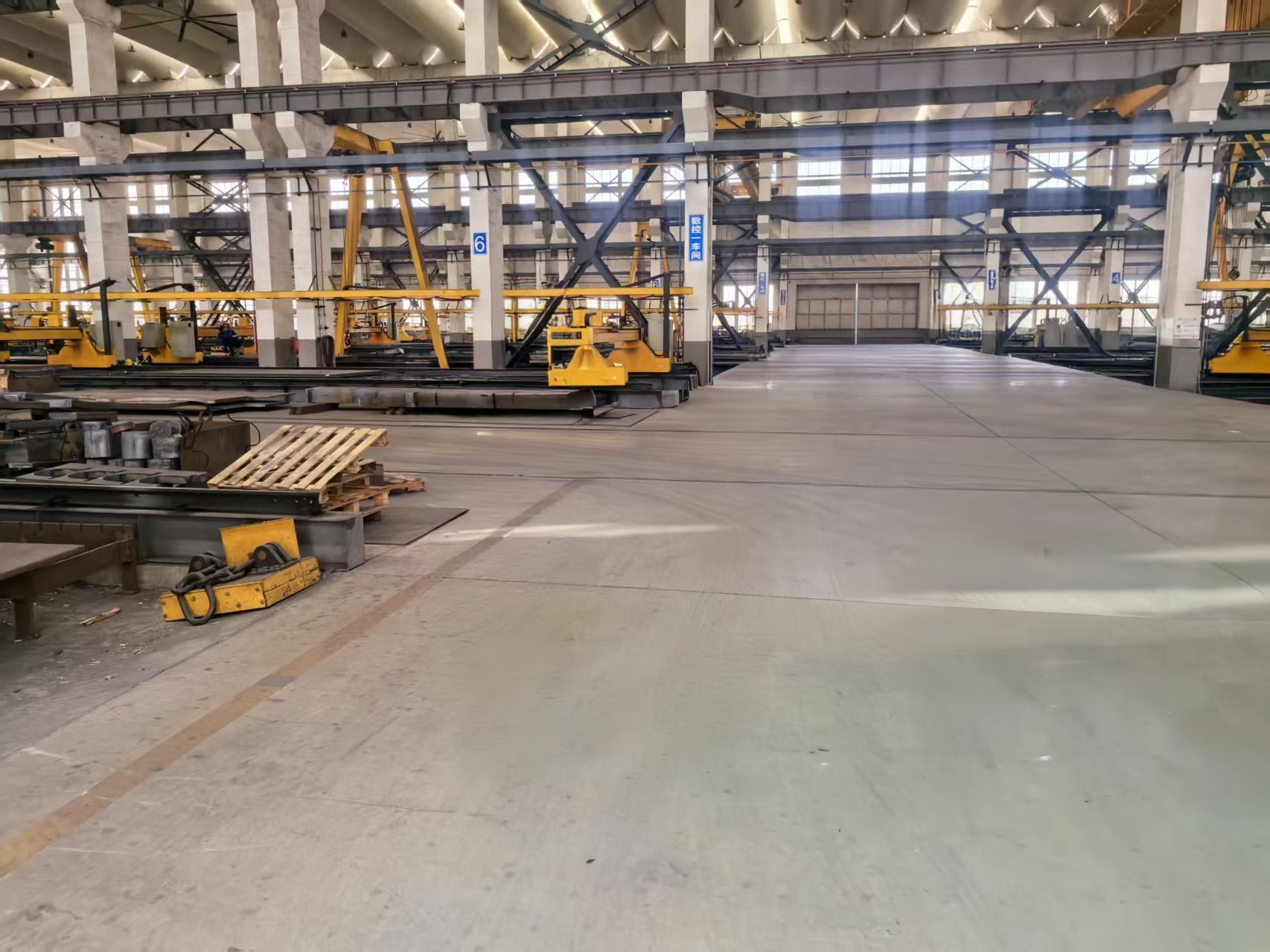
Next step: send your site measurements — clear height, usable floor area, feed method and material type — and NKBALER will map them to the right vertical or horizontal configuration.
Email: Sales@nkbaler.com | WhatsApp / Tel: +86 15021631102 | Web: www.nkbaler.com | Blog: blog.nkbaler.com
Address: Qun Sheng Lu, Hui Shan Qu, WuXi Shi, Jiang Su Sheng, China
Have Questions or Need More Details?
Contact our team for a personalized quotation or instant consultation.
Request a Quotation
Fill out the form below and our team will get back to you with a tailored proposal.
WhatsApp Direct Chat
Prefer to chat in real-time? Message us on WhatsApp for instant assistance & quick answers.
- Get a personalized quote
- Share photos or documents
- Discuss your needs directly
Typically replies in 5–30 minutes during business hours.