
From Loose Paper to Transportable Bales: What a Waste Paper Hydraulic Baler Machine Does
A waste paper hydraulic baler machine turns loose paper scrap into a compact, tied block. Loose paper reaches a site with a great deal of air inside it and very little structural strength; the baler presses that material inside a chamber with a hydraulic ram, holds it while wire or strap is applied, and releases a bale that stays together once the pressure is removed. What leaves the machine is a unit that can be stacked, moved with a forklift and loaded for transport, rather than a heap that has to be shovelled, bagged or re-handled several times before it leaves the yard.
This article explains the machine in terms of what it actually does: how loose paper becomes a bale, which parts of the process a buyer should understand before shortlisting equipment, where the process is used in warehouse and industrial waste management, new recycling plant projects, small processing workshops and recycling-facility upgrades, which supporting equipment normally belongs in the same project scope, and which inputs have to be confirmed before any model can be specified.
NKBALER is the brand of Shaanxi Nick Machinery Equipment Co., Ltd., a company established in 2013 that works on the research, development and sales of environmental protection equipment and packaging machinery equipment. Its product range covers vertical balers, full-automatic horizontal balers, manual horizontal balancers and press bagging machines; the stated main markets are North America, South America and Asia, with export business reported at around 90% of total sales.
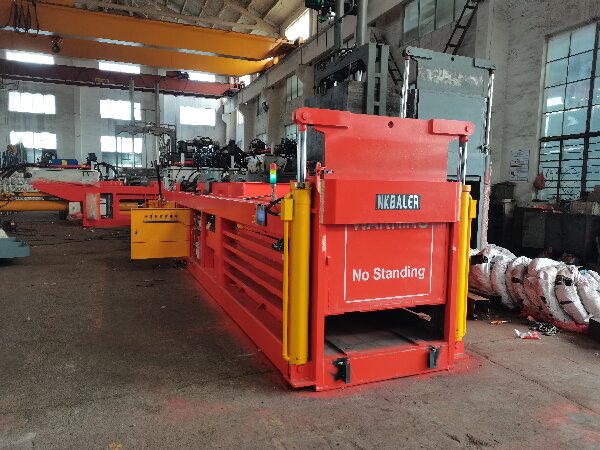
Why loose paper needs a handling step of its own
Paper scrap is mostly air by volume. A sack, a carton or a cage of loose offcuts looks like a large object but holds very little fibre, so it consumes floor space out of proportion to its weight, tends to blow around when moved, and is awkward to load. In day-to-day site practice, that means repeated handling: sweep it, shovel it, tip it into a container, and then pay to move a container that is largely empty space.
The feedstock is also not a single material. A USITC executive briefing on recovered paper grades defines mixed paper as a broad category that includes old magazines, low-quality office waste paper such as discarded mail, and unsorted waste or scrap paper. That definition is useful at the baler because it describes what the machine may actually receive: a stream with varying sheet size, stiffness, moisture history and contamination, rather than one uniform input.
Baling changes three things at once. It changes how much space a given amount of material occupies, how that material is handled on site, and how often it has to leave the site. It does not change the weight of the material, and it does not remove contaminants, so the value of the output still depends on what went in.
What the machine does: compress, contain, restrain
A hydraulic baler performs three connected jobs. It compresses the material, it contains that compression inside a chamber that gives the bale its shape, and it restrains the compressed block so the shape survives after the ram withdraws. Everything else in the machine exists to make those three steps repeatable.
Compression
An electric motor drives a hydraulic pump, which pressurises oil and pushes a cylinder. The cylinder moves the ram into the chamber and reduces the volume the paper occupies. The force available is a machine property and is published per model: the NKBALER NKW125BD horizontal baler, for example, lists a hydraulic power of 125 ton, a feed opening of 2000 mm by 1100 mm and a bale size of 1100 mm by 1250 mm by 1700 mm.
Density is the practical result of that force applied to a particular material. Two other NKBALER horizontal models illustrate how the published figures differ: the NKW80Q datasheet lists a material density of 300 to 400 kg/m3, while the NKW180QT lists 500 to 600 kg/m3, alongside a bale size of 1100 mm wide by 1250 mm high by up to 1600 mm long. These are datasheet values for those models, not a promise about every paper grade; what a specific stream achieves depends on the material, the feed method and the operating cycle.
Containment
The chamber decides the bale geometry. Because the bale is formed inside a fixed cross-section, bale width and height are essentially set by the machine, while bale length builds up as successive charges are compressed. That is why bale weight and bale size are usually specified together in a project brief: a buyer who fixes one without the other leaves the configuration open.
Restraint
Once the block is compressed, it must be tied before the ram releases it. Horizontal machines use baling wire, PET strapping or a combination, applied through the chamber in a set pattern. The NKW125BD, for instance, lists 10# bale wire at five pieces per bale. Wire and strap are consumables rather than accessories: they are part of the recurring operating cost of the process, and the tying pattern is part of what determines whether a bale arrives at the receiving dock intact.
Where baling sits in an industrial waste operation
The equipment is used in the food, pharmaceutical, packaging, chemical, electronics, metal, waste treatment and recycling industries, which reflects a simple fact: almost any production or distribution site generates a compressible secondary material stream. Baling is normally placed at the end of the internal handling chain, after sorting and size reduction and before storage and outbound transport. It is a densification step, not a sorting step.
Compliance shapes the project as much as throughput does. Horizontal baling presses placed on the European market are expected to meet EN 16252:2012, the safety standard for horizontal baling presses published by CEN in 2012, which covers design and manufacture requirements. For a buyer, that means the standard applicable in the destination market belongs in the enquiry rather than in a later review, because it can influence guarding, controls and documentation, and therefore the machine a supplier offers.
Projects sometimes add their own requirements to the brief, such as low-noise design, lower energy consumption and higher efficiency, particularly where the baler will sit close to a production area or run for long shifts. Where continuous running is expected, the reference scenario for this equipment describes a PLC-controlled cycle and 24/7 industrial duty, with a conveyor line and bale-closing materials forming part of the same installation.
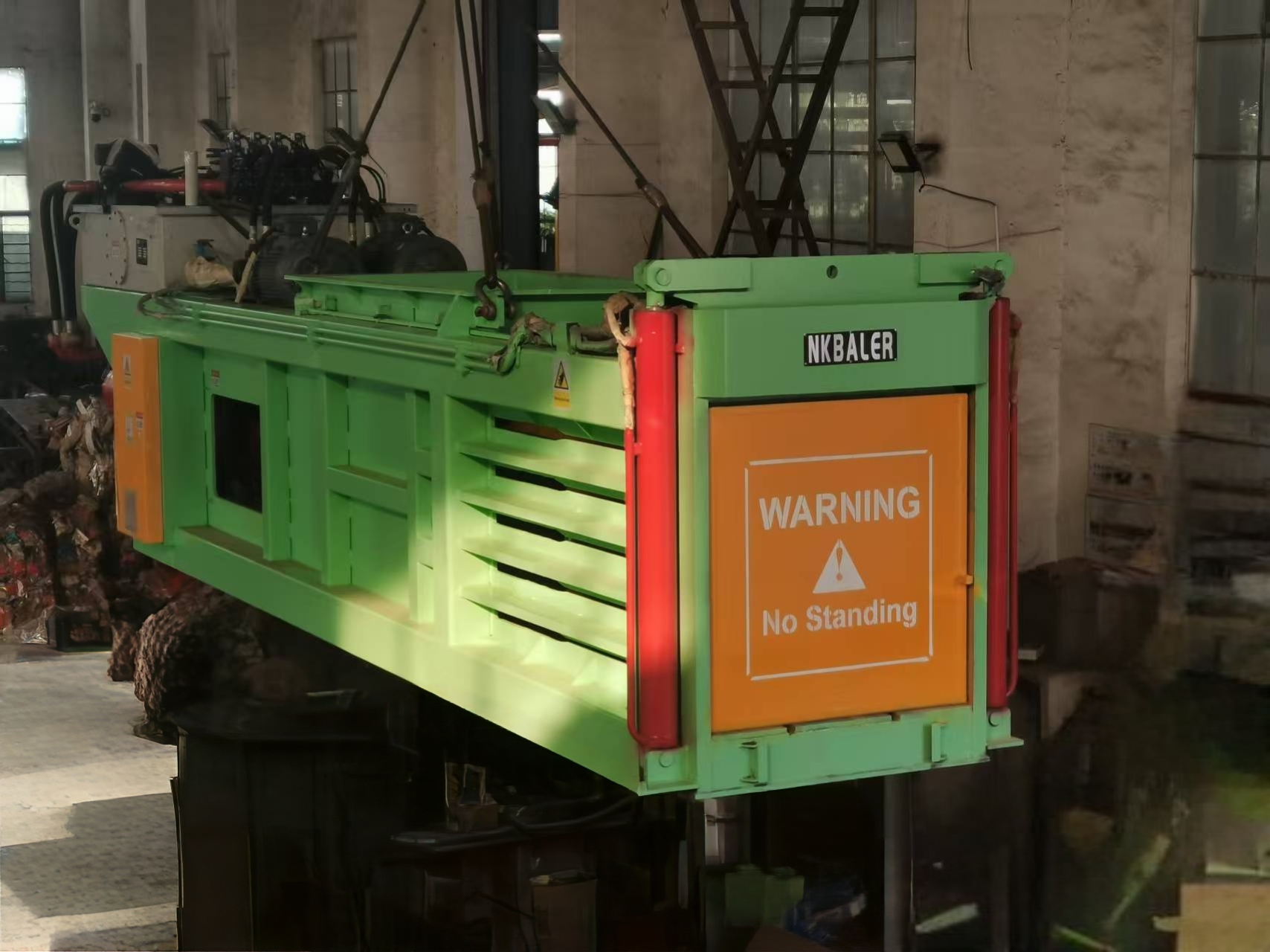
Step by step: from a tipped load to a strapped bale
The sequence below describes a horizontal baler used on paper scrap. Vertical balers follow the same logic with a different chamber orientation and a manual load, so the order of operations is a useful mental model regardless of the format finally selected.
- Receiving and pre-check. Material is tipped or delivered to the baler area. This is where gross contamination is visible, and where the decision is made whether the load can go straight in or needs a preliminary step.
- Feeding. Loose paper enters the chamber either manually or through a conveyor. A conveyor line is the usual choice where volume is steady, because it separates the feeding task from the compression cycle and keeps the operator out of the loading zone.
- First compression stroke. The ram advances and reduces the volume of the charge. The material does not reach final density in one pass; the first stroke creates the working face that later charges are pressed against.
- Repeat charges and strokes. Further material is added and compressed until the bale reaches its target length or the chamber is full. The number of cycles per bale is a function of the material and the bale size, and is one of the practical numbers a supplier should confirm against the buyer's own stream.
- Tying. With the bale still under pressure, wire or PET strap is fed through and tied. On the NKW125BD this is five pieces of 10# bale wire. Tension at this point is what preserves density after ejection.
- Ejection. The bale is pushed or tipped out of the chamber. This is the moment when the quality of the preceding steps becomes obvious: a well-formed bale holds its shape, while a poorly tied or over-contaminated bale begins to relax.
- Storage and loading. Bales are stacked and then loaded for transport. Stacking height, aisle width and forklift access belong in the site layout, because a baler that produces bales the yard cannot store has only moved the bottleneck.
The point of the sequence is that a baler is a station, not a standalone appliance. Each step has its own space, access and labour requirement, and a project that budgets for the press alone tends to discover the rest of the line later.
Where the process is used
Warehouse and industrial waste management
Distribution centres and factories generate a steady flow of cartons, wrapping paper, office paper and packaging offcuts. Baling reduces the number of containers leaving the site and gives the waste contractor a defined unit to collect. In these settings the baler is usually close to the dispatch area, and noise, dust and traffic become the practical constraints rather than tonnage.
New recycling plant projects
In a new plant, the baler is specified alongside the sorting and size-reduction equipment, and the bale format has to match the off-take arrangement: what the receiving mill or trader will accept, and how the bales will be stacked and loaded. Getting the bale specification agreed at the design stage avoids re-engineering the dispatch area after commissioning.
Small processing workshops
Smaller operations typically need a compact machine that fits an existing building and runs on the power already available. For low and intermittent volumes, a vertical baler is often the practical starting point, with a manual or semi-automatic horizontal unit added as volumes grow. The relevant question is not which format is larger, but which format matches the actual weekly material flow and the available footprint.
Recycling-facility upgrades
Upgrades are usually triggered by a bottleneck rather than by growth. An existing baler that cannot keep pace, a bale format the buyer no longer accepts, or a manual tying step that consumes labour are all reasons to revisit the configuration. In an upgrade the constraint is the existing building, the existing conveyor runs and the available power, so the specification work starts with a survey rather than a datasheet.
The application scenario for this equipment is described as common across a wide range of markets, including China, Bulgaria, Canada, Ecuador, Spain, Finland, Greece, Guatemala, Hungary, Indonesia, India, Iran, Kenya, Kuwait, Sri Lanka, Mexico, Malaysia, Nigeria, New Zealand, Pakistan, Portugal, Russia and Singapore. Operating conditions are typically an indoor recycling workshop at ambient temperature between -10 degrees Celsius and 45 degrees Celsius, with normal humidity, light dust and a stable three-phase power supply.
Supporting equipment that belongs in the same project scope
A baler is normally bought as part of a small system. The equipment matched to this application includes conveyors, hydraulic components, baling wire, PET strapping, jumbo bags, packing tools, shredders and crushers. Each item has a distinct role, and each one changes the layout, the budget or the operating routine.
- Conveyors move loose material from the sorting or tipping point to the feed opening, separating feeding from compression and reducing manual handling. Conveyor length and width are project-specific and should be fixed with the machine layout.
- Hydraulic components cover the cylinders, pumps, valves and oil circuit that generate and control the pressing force. They are the parts that determine service intervals, so their availability as spares matters over the life of the machine.
- Baling wire is the traditional tying medium for paper and cardboard bales, and is specified by gauge and number of wires per bale.
- PET strapping is an alternative or complementary tying medium, chosen where the receiving mill or trader asks for it or where a different closure is preferred.
- Jumbo bags are used where loose material or a particular fraction is bagged rather than baled, and belong to the same handling discussion even where the baler itself is not involved.
- Packing tools cover the hand tools and consumables needed to close, tension and finish a bale or bag properly.
- Shredders and crushers reduce size before baling. They are relevant where the material is bulky, where bale density targets are demanding, or where downstream handling requires a more uniform particle size.
Treating these as a scope rather than as options is what separates a working installation from a machine that sits unused because nothing feeds it or nothing closes the bale.
Documented configuration data for horizontal models
The table below reproduces published specification values for three NKBALER horizontal hydraulic baler models. It is included to show how capacity, bale format and power scale together, not to rank the models against each other: the appropriate configuration depends on the material, the site and the required output.
| Model | Documented capacity | Bale size (W x H x L) | Main motor power | Feed opening |
|---|---|---|---|---|
| NKW80Q | 3 to 5 ton per hour | 1100 x 800 x up to 1600 mm | 30 kW + 11 kW | 1500 x 800 mm |
| NKW125BD | 5 to 7 ton per hour | 1100 x 1250 x 1700 mm | 30 kW / 40 HP | 2000 x 1100 mm |
| NKW180QT | 12 to 15 ton per hour | 1100 x 1250 x up to 1600 mm | 45 kW + 7.5 kW | 2000 x 1100 mm |
Values are published datasheet figures for the listed models. Actual output and bale density depend on material type, feed method, cycle settings and site conditions, and should be confirmed against the buyer's own stream before a model is fixed.
Two patterns are worth noting. First, bale width and height are narrow across the range while bale length varies, because length is built up during the cycle. Second, the models with the largest feed openings also carry the higher capacity figures, which reflects the relationship between how much material can enter per stroke and how much can be processed per hour. For a buyer, that means feed opening and conveyor width are not cosmetic details: they set the practical throughput ceiling.
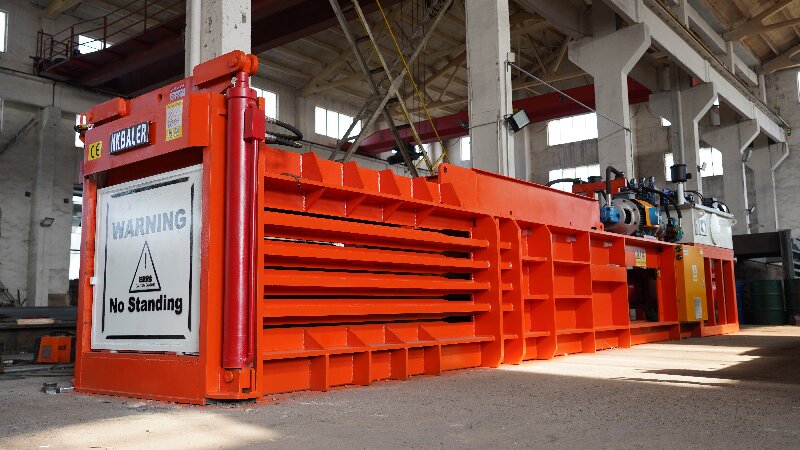
Boundaries: what baling does and does not change
A clear view of the limits is as useful as the capability list, particularly at the awareness stage when the first question is whether a baler is the right tool at all.
- Baling does not reduce the weight of material leaving the site; it changes the volume and the handling unit.
- Baling does not sort. Plastic film, metal, wet material or heavily mixed loads need to be addressed before the chamber, or bale quality and off-take value will suffer.
- Baling does not remove moisture. Wet paper behaves differently from dry paper, and a stream with variable moisture will produce variable bales unless the process is managed.
- Tying is a recurring cost. Wire, PET strap and the labour to apply them continue for the life of the machine.
- Bale quality depends on the whole line. Feeding consistency, shredding where used, and the tying pattern all contribute, so a specification that treats the press in isolation is incomplete.
- Compliance is a market condition, not a performance feature. Whether the destination market applies a standard such as EN 16252:2012 has to be established before the offer is compared, not after.
Project inputs to confirm before a model is specified
Before a supplier can confirm a model or a complete-line solution, the customer should provide a defined set of inputs. These are the parameters that actually determine the configuration, and supplying them together shortens the specification cycle considerably.
- Material type. Paper, cardboard, mixed paper, plastic, metal or a combination, and whether the stream includes the kind of mixed grade described in recovered-paper trade definitions.
- Material dimensions and loose density. Sheet size, whether the material is baled flat or loose, and how much space a known weight occupies before baling.
- Target bale weight or size. Stated as weight, as dimensions, or both, and matched to what the receiving mill or trader will accept.
- Available space. Machine footprint plus feeding area, conveyor runs, bale storage and forklift access, measured in the actual building rather than from a catalogue drawing.
- Power conditions. Voltage, phase and frequency available on site, since the equipment is offered with different supply configurations.
- Automation level. Manual, semi-automatic or full-automatic operation, including whether automatic tying is required and how much operator involvement the site can support.
- Required throughput. The realistic volume per hour or per shift, based on recorded waste generation rather than on the peak week.
- Working environment and any special requirements. Indoor or covered location, ambient temperature range, and requirements such as low-noise design or lower energy consumption where the site imposes them.
Once these are known, the choice between a vertical baler, a manual horizontal baler, a semi-automatic or full-automatic horizontal unit, or a press bagging machine becomes a matter of matching documented capability to a defined need rather than comparing headline numbers.
Frequently asked questions
What does a waste paper hydraulic baler machine actually do to loose paper?
It compresses loose paper inside a chamber with a hydraulic ram and ties the compressed block so it holds shape after the pressure is released. The stated operating mode is to compress loose waste into bales that are easier to store, handle and transport, helping reduce space requirements and waste transportation frequency. The machine changes bulk and handling, not weight.
Are there safety standards that apply to horizontal baling presses?
Yes, in the European Union. EN 16252:2012, published by CEN, sets safety requirements for the design and manufacture of horizontal baling presses, and equipment placed on the EU market is expected to meet them. Buyers should confirm the standard applicable in their own destination market and raise it at the enquiry stage, because it can affect guarding, controls and documentation.
How do I choose the right hydraulic baler for a waste paper, plastic or scrap metal recycling project?
Confirm material type, loose density, target bale size or weight, throughput, space and power first, then select between vertical, manual horizontal, semi-automatic and full-automatic formats. Vertical balers suit limited space and low output; horizontal or full-automatic models suit continuous higher throughput and automatic tying. Material adaptability, compression force, throughput, footprint, automation level, operating cost, maintenance and after-sales support are the criteria that normally decide the outcome.
Which supporting equipment should be planned together with the baler?
The matched equipment list for this application covers conveyors, hydraulic components, baling wire, PET strapping, jumbo bags, packing tools, shredders and crushers. Conveyors separate feeding from compression, wire and strapping close the bale, shredders and crushers reduce size before baling, and hydraulic components determine spare-parts needs. Planning them as one scope avoids a machine that cannot be fed or cannot be tied.
What working conditions does the equipment expect?
The reference scenario describes an indoor recycling workshop with an ambient temperature between -10 degrees Celsius and 45 degrees Celsius, normal humidity, light dust and a stable three-phase power supply. Where continuous operation is required, the described mode is a PLC-controlled cycle for 24/7 industrial duty. Site conditions should be checked against these expectations rather than assumed.
What information should a buyer prepare before requesting a quotation?
Material type, material dimensions and loose density, target bale weight or size, available space, power conditions, automation level and required throughput. Adding any site-specific requirements such as low-noise design or lower energy consumption helps as well. With those inputs a supplier can confirm a model or a complete-line solution instead of offering a range of possibilities.
Where can I see the machine range and confirm a configuration?
NKBALER publishes its horizontal baler range in the downloadable catalogue linked at the end of this article, and configuration questions can be sent to Sales@nkbaler.com or raised on +86 15021631102. Sending material type, target bale size and required throughput with the enquiry allows the reply to be specific rather than general.
Conclusion
A waste paper hydraulic baler machine is best understood as a densification station. It takes a material that is mostly air, compresses it inside a chamber with hydraulic force, restrains the compressed block with wire or strap, and releases a bale that can be stacked, moved and loaded. The value is not in the press alone but in the change of handling unit: fewer movements, less floor space consumed, and a defined bale format that a waste contractor or receiving mill can work with.
Whether that station belongs in a warehouse, a new recycling plant, a small workshop or an upgrade of an existing facility, the specification work starts in the same place. Material type, dimensions and loose density, target bale weight or size, available space, power conditions, automation level and required throughput define the requirement; conveyors, tying consumables, shredders and packing tools define the surrounding scope; and the standard applicable in the destination market defines the compliance gate. Confirm those inputs first, and the choice between vertical, horizontal and automatic formats becomes a comparison of documented capability against a known job.
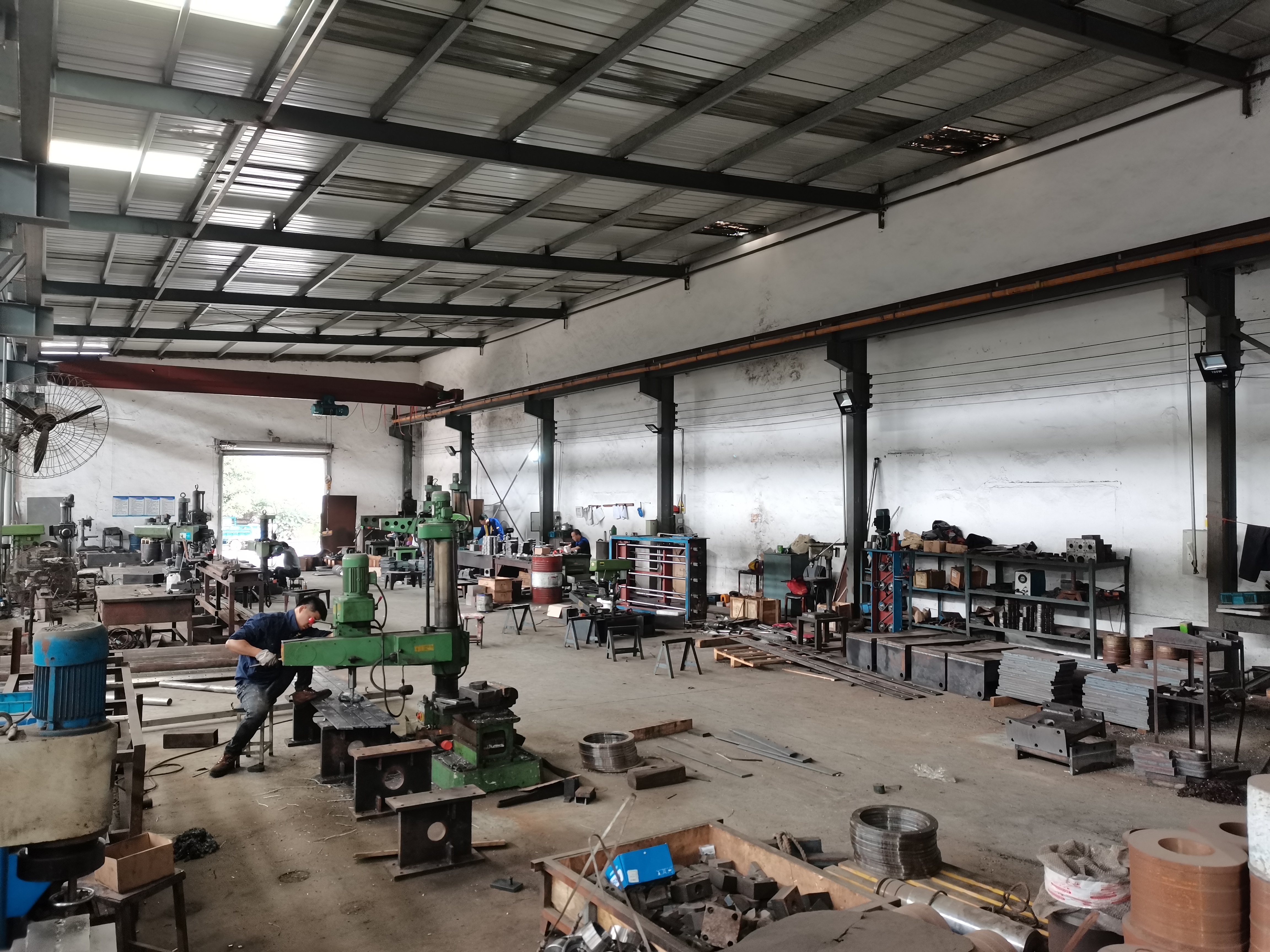
Reference and next step. NKBALER is the brand of Shaanxi Nick Machinery Equipment Co., Ltd., a manufacturer established in 2013 with a 5,000 square metre facility, around 50 employees, a 15-engineer R&D team and an annual production capacity of about 600 units. The horizontal baler catalogue, including the models referenced above, is available for download: Horizontal Baler catalogue (PDF).
Have Questions or Need More Details?
Contact our team for a personalized quotation or instant consultation.
Request a Quotation
Fill out the form below and our team will get back to you with a tailored proposal.
WhatsApp Direct Chat
Prefer to chat in real-time? Message us on WhatsApp for instant assistance & quick answers.
- Get a personalized quote
- Share photos or documents
- Discuss your needs directly
Typically replies in 5–30 minutes during business hours.