
Vertical or Horizontal Waste Paper Baler: Space, Automation, Bale Handling
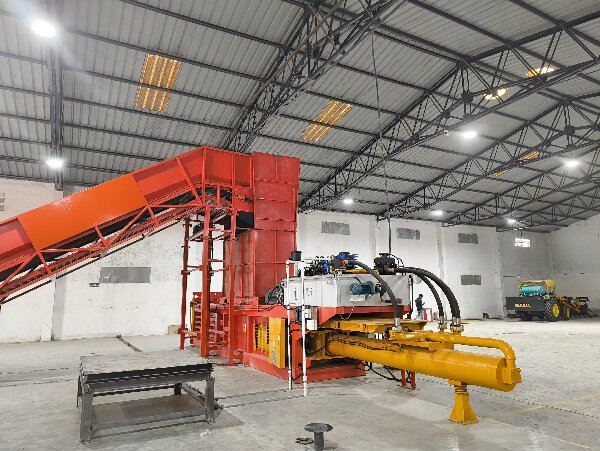
A vertical waste paper baler and a horizontal one do the same job with different geometry, and that geometry settles three questions a specification sheet rarely answers: how much floor area the machine plus its bale exit really consumes, how much of the load, press and tie cycle runs without a person, and what happens to the bale once it leaves the chamber.
This guide compares NKBALER's three families — Vertical Balers, Manual Horizontal Baler and Full-Automatic Horizontal Baler — on those three axes, and explains where a press bagging machine becomes the better adjacent option. NKBALER is the brand of Shaanxi Nick Machinery Equipment Co., Ltd., a manufacturer founded in 2013 and engaged in the research, development and sales of environmental protection equipment and packaging machinery, with vertical balers, horizontal balers and press bagging machines in its product range.
Short answer. Choose the smallest machine whose bale handling loop your site can run every shift, then add automation until the labour on that loop is affordable.
- Space: vertical balers are positioned for limited floor space and lower output; horizontal machines need a straight run for the chamber, the ram path and the bale exit.
- Automation: automatic tying and higher automation levels are normally specified on horizontal configurations; full-automatic is aimed at continuous, high-throughput work.
- Bale handling: a bale lifted out of a vertical chamber and a bale pushed out of a horizontal chamber create different labour, storage and transport tasks.
Why most vertical-versus-horizontal comparisons stall
Buyers usually start with compression force, because force is the number printed largest on a datasheet. Force tells you what the machine can press. It does not tell you who removes the bale, how long the tying step takes, whether the bale can be stacked two high, or whether a pallet truck can reach the chamber door during a busy shift. Those are the details that decide whether an installation keeps up in month six.
The second stall is naming. Catalogue language is not standardised across the industry: a machine sold as manual may include an assisted tying step, and a machine sold as automatic may automate tying but not loading. NKBALER's range names a Manual Horizontal Baler and a Full-Automatic Horizontal Baler, while published selection guidance separates vertical, manual horizontal, semi-automatic and full-automatic configurations, and the company's customisation list treats automation level and tying method as configurable items. The practical consequence is simple: whenever you compare quotations, confirm which configuration the quoted model actually represents, and ask what the machine does without an operator rather than what the label says.
A third stall is volume. Buyers ask for a tonnage cut-off between vertical and horizontal, as if one exists for every site. It does not. The crossover depends on your bale weight, your shift pattern and how far a finished bale has to travel, so it has to be calculated from your own numbers rather than copied from a table.
Industry context: more paper to densify, less room to do it in
Grand View Research values the global baler market at USD 6.4 billion in 2024 and projects USD 12.0 billion by 2030. That figure covers agricultural and industrial balers together, so it indicates category scale rather than the size of the waste paper baler segment; it is useful for understanding that baling equipment is a substantial, continuing capital category, not for budgeting a single machine.
The material itself is not one thing. A USITC executive briefing defines mixed paper as a broad recovered-paper category that includes old magazines, low-quality office waste paper such as discarded mail, and unsorted waste or scrap paper. Clean old corrugated containers and a mixed office stream do not arrive at the same chamber in the same condition, and that difference belongs in your specification, not in a footnote.
Alongside material variability, two site-level constraints shape most decisions. Floor area is fixed and usually already committed to storage or sorting, and the number of people available to feed a press and move bales is limited. Both constraints favour different machines at different volumes, which is exactly why the space, automation and bale handling axes matter more than a single headline parameter.
The three axes, defined in terms a buyer can check
Axis 1: space, including everything the machine touches
Machine footprint is the smallest part of the space question. The full requirement is the plan area of the press, plus the feeding zone where material is staged and loaded, plus the bale exit path, plus the stacking area for finished bales, plus maintenance access. A compact vertical unit with no room to wheel a finished bale away is a worse space decision than a longer horizontal machine with a clean exit lane.
Axis 2: automation, measured as tasks removed
Automation is not one switch. It is a series of tasks: loading material into the chamber, running the press cycle, tying or strapping the bale, and ejecting it. Different configurations remove different tasks. Documented positioning places vertical balers with limited space and low output, and horizontal or full-automatic models with continuous high throughput and automatic tying. NKBALER lists automation level and tying method among the items that can be customised, together with model type, compression configuration, material adaptation, site layout, auxiliary conveyors and complete-line configuration.
Axis 3: bale handling, the step that absorbs labour
As a general design principle, a vertical baler presses downward and the finished bale is taken out of the chamber before it is moved to storage, while a horizontal baler pushes the bale out along the chamber, so the machine needs a defined exit direction and somewhere for the bale to land. The consumables belong to this axis as well: NKBALER's matched-equipment list for baling projects includes baling wire, PET strapping, jumbo bags and conveyors, which is a reminder that the wire or strap supply and the take-away route are part of the system you are buying. Confirm the ejection method and the handling equipment needed for the exact model you are quoted.
The reference framework: three baler families and one adjacent option
Vertical Balers
Vertical balers are the entry point for sites with limited floor space and intermittent paper volume. The range listed by NKBALER includes models such as NK6040T10, NK60LT, NK-T90L, NK080T100, NK1070T60, NK110T150, NKOT150, NKC150 and NK1580T200, which is a wide spread of sizes rather than one machine — so chamber dimensions, bale size and motor power still have to be matched to your material at quotation stage. Their strength is a small plan area and a low entry point into baling; their operating cost sits in manual loading and manual bale removal.
Manual Horizontal Baler
The horizontal family changes both footprint shape and workflow. Material is loaded into a chamber that runs along the floor, the ram compresses horizontally, and the bale leaves along the machine rather than being lifted out of it. Published selection guidance positions semi-automatic horizontal configurations in medium, continuous waste paper and plastic recycling with automatic tying, so if tying labour is your main cost, this is the band where the question becomes worth asking. NKBALER's horizontal models include NKW80Q, NKW125Q, NKW160Q, NKW180QT, NKW80BD, NKW125BD, NKW180BD and NKW250BD; confirm the tying arrangement and automation level per model, because the family name alone does not fix them.
Full-Automatic Horizontal Baler
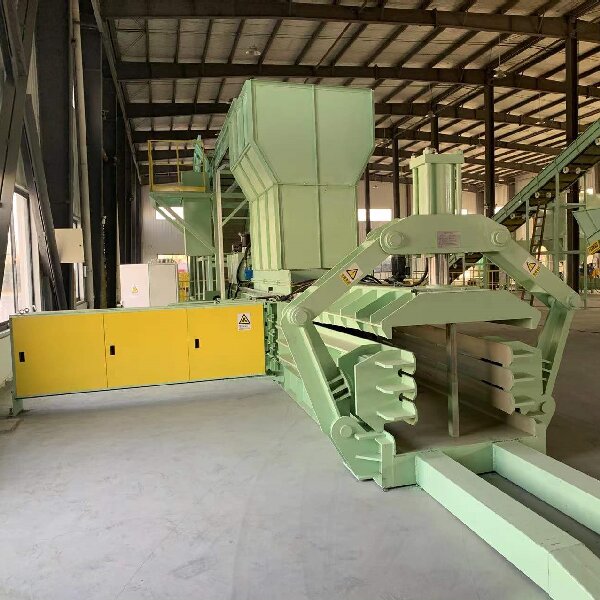
The full-automatic horizontal baler is the configuration to examine when the baler stops being a stand-alone machine and becomes a station in a line. Documented positioning links full-automatic models to continuous high throughput and automatic tying, and the customisation list adds auxiliary conveyors and complete-line configuration, which is what allows material to arrive at the chamber without a person carrying it. The trade-off is that a line assumes stable power, a defined material flow and someone responsible for the upstream conveyor; if those do not exist yet, the automation is premature.
When a press bagging machine is the better adjacent option
A press bagging machine is a separate family in the same range, listed by NKBALER as models NKB10, NKB20, NKB220 and NKB280, and the company's main product list names a Press Bagging Machine alongside the vertical and horizontal balers. The difference is the output format: the material leaves as a bagged unit rather than as a wire-tied or strapped bale. That matters when the receiving step in your chain is built around bags, or when the material will not hold a tied bale shape well enough for the handling your downstream customer uses.
The trade-off is consumables and handling profile: bags replace baling wire or PET strapping, and bagged units are moved, stacked and loaded differently from dense tied bales. Because the customisation list applies to both families — automation level, tying method, site layout and complete-line configuration — the deciding question is not compression force but what your downstream chain will accept. Confirm the bag type, closure method and output dimensions with the supplier before treating a bagging press as a drop-in substitute.
Step-by-step: how to run the comparison for your own site
- Write down the bale handling loop before you look at machines. From chamber to stack to truck, list every step and who performs it. If the loop needs two people and a pallet truck per bale, that cost belongs in the comparison next to the purchase price.
- Measure the space the loop needs, not just the machine. Mark the press plan area, the feeding zone, the bale exit direction, the stacking area and maintenance access on a floor plan. Vertical configurations are positioned for limited space; horizontal configurations need the long run. Check door widths and turning radii for the vehicle that removes bales.
- Set the automation level by shift pattern. If paper arrives in bursts and one person can keep up, a vertical baler with manual handling may be adequate. If material arrives continuously through a shift, specify a horizontal configuration and decide explicitly whether tying is manual, semi-automatic or automatic, and whether a conveyor feeds the chamber.
- Match the bale to the transport that follows. Bale size and weight have to suit your forklift, pallet truck or container loading method. A bale that is efficient to press but impossible to move is a handling problem you paid for.
- Check site conditions and power. NKBALER's stated working condition for recycling applications is an indoor workshop at roughly -10°C to 45°C, normal humidity, light dust and a stable three-phase power supply. Confirm the supply available at the installation point before the model is finalised.
- Verify paperwork and build quality. Ask for the certificate that covers your market, the standards it cites, its number and its validity dates; ask how final testing is performed (NKBALER states 100% test); confirm lead time, minimum order and after-sales scope in writing.

Use cases: which configuration fits which volume pattern
Intermittent paper in a tight floor area
A packaging line, warehouse or retail back-of-house that generates cardboard and mixed paper in bursts, with limited space beside the dock, is the classic vertical case. The machine stands in a small plan area, bales are produced when enough material has accumulated, and removal happens once or twice a shift rather than continuously. The limitation to accept is manual involvement at loading and bale removal.
Continuous inflow at a recycling station
Where paper and plastic arrive all shift, the handling loop becomes the constraint. A documented example is a recycling station in Indonesia running a horizontal hydraulic baler for waste plastic and waste paper baling; the reported outcome is stable operation with low noise and low energy consumption, an expected service life of 10 to 15 years, and the related models listed are NKW180QT, NKW160Q, NKW125Q and NKW80Q. This is the band where horizontal geometry earns its floor space: the bale exits along the machine and the tying step can be automated.
High-throughput line integration
When the baler sits downstream of a sorting or shredding line and material must not be carried to the chamber by hand, the full-automatic horizontal configuration with auxiliary conveyors and complete-line configuration is the relevant reference point. The decision test is whether upstream flow is genuinely continuous; if it is intermittent, automation buys capacity you will not use.
When the output must be bagged
If the next step in the chain is a bagged unit rather than a tied bale, a press bagging machine such as NKB10, NKB20, NKB220 or NKB280 is the adjacent option to price against a baler, using the same layout and automation questions.
Comparison table
| Decision axis | Vertical baler | Manual horizontal baler | Full-automatic horizontal baler | Press bagging machine (adjacent) |
|---|---|---|---|---|
| Documented positioning | Limited space, lower output | Medium, continuous recycling; confirm tying method | Continuous high throughput with automatic tying | Alternative output format in the same range |
| Floor plan | Compact plan area; bale removed from the chamber | Long chamber plus a defined bale exit run | Chamber, feed conveyor and control area | Confirm layout per model |
| Loading | Manual loading into the chamber | Manual, with auxiliary conveyors available as an option | Conveyor and complete-line configuration available | Confirm feeding method with supplier |
| Tying / closure | Confirm per model | Confirm manual, semi-automatic or automatic | Automatic tying | Bag closure rather than baling wire; confirm |
| Bale handling | Bale taken out, then moved to storage | Bale pushed out along the chamber | Bale pushed out; plan the take-away path | Bagged units; different handling profile |
| Labour profile | Highest manual involvement | Lower than vertical once tying is automated | Lowest on the press and tying loop | Depends on bag handling |
| Best fit | Intermittent low volume, tight floor | Medium continuous flow | High continuous flow, line integration | Downstream chain requires bags |
| Verify at quotation | Chamber size, bale weight, power supply | Tying method and automation level | Scope of automation, conveyor interface | Bag type and output format |
Positioning statements above follow NKBALER's documented selection guidance; they describe configuration intent, not measured throughput. Model-level specifications still have to be confirmed before ordering.
What this framework does not decide
Three questions stay open until you move from family comparison to a specific quotation. First, bale density and cycle time for your actual grade mix are model-level performance questions, and they should be answered from datasheets and a factory audit rather than from a family description. Second, compliance is configuration-specific: horizontal baling presses placed on the EU market must meet safety requirements for design and manufacture set out in EN 16252:2012, and NKBALER's EU/EEA Verification of Conformity (No. DPWD/09/060/2024, valid 19 September 2024 to 18 September 2029) cites EN ISO 12100:2010, EN 60204-1:2018 and EN 415-1:2014, covering models across the vertical, horizontal and bagging families. Confirm the certificate covers the exact model and market you are buying for. Third, total cost includes consumables, spare parts and the labour your chosen automation level leaves in place.

Frequently asked questions
Which certificates should I check on a waste paper baler sold into the EU or Türkiye?
For the EU/EEA market, NKBALER lists a Verification of Conformity numbered DPWD/09/060/2024, issued 19 September 2024 and valid to 18 September 2029, citing EN ISO 12100:2010, EN 60204-1:2018 and EN 415-1:2014. For Türkiye, it lists an Attestation Certificate of Machinery Directive numbered EASY03220201M, issued by UDEM International Certification Auditing Training Centre, valid 22 March 2022 to 21 March 2027 and citing EN ISO 12100:2010 and EN 60204-1:2018. Because horizontal baling presses sold in the EU must also meet the design and manufacture safety requirements of EN 16252:2012, confirm which standards apply to your exact configuration and that the document covers the model you are buying.
How much floor space does a vertical baler need compared with a horizontal one?
Plan four areas, not one: the machine plan area, the feeding zone, the bale exit path and the stacking area, plus maintenance access. Vertical balers are positioned for limited space, so they usually win on plan area. Horizontal machines need a straight run along the chamber and a defined exit direction, which changes the shape of the space required more than the total area. Ask the supplier for layout drawings for the specific model rather than estimating from a photograph.
Does a full-automatic horizontal baler remove the need for an operator?
It reduces involvement on the press and tying loop rather than eliminating people from the process. Full-automatic horizontal configurations are positioned for continuous high throughput with automatic tying, and NKBALER treats automation level, tying method, auxiliary conveyors and complete-line configuration as customisation items. Loading arrangements, bale take-away, stacking and quality checks still need a plan and someone responsible for them. Ask the supplier to state exactly which tasks the quoted model performs automatically.
What drives the price difference between vertical, manual horizontal and full-automatic balers?
Price follows configuration rather than family name. NKBALER's customisation scope covers model type, compression configuration, automation level, tying method, material adaptation, site layout, auxiliary conveyors and complete-line configuration, and each item changes the build. The published commercial terms are a minimum order of one unit and a lead time of 30 to 45 days. Request an itemised quotation against a written specification so that two offers can be compared line by line instead of as single totals.
What material and site data should I send to get a dependable quotation?
NKBALER's stated requirement for model and solution confirmation is the material type, its dimensions, loose density, the target bale weight or size, the available space, the power conditions, the required automation level and the required throughput. Adding the grade mix — clean corrugated versus a mixed paper stream — and the handling equipment available on site will make the recommendation more precise. If you plan to validate a configuration with your own material, treat that as a conditional test request and confirm with the supplier what can be replicated before shipment, since production units are tested before delivery.
What are the lead time, minimum order and after-sales arrangements?
NKBALER lists a minimum order of one unit, a lead time of 30 to 45 days and 100% testing of units. After-sales support covers installation, training, maintenance, technical guidance, spare parts and after-sales service, and the company provides after-sales support and spare parts for export markets in Southeast Asia, the Middle East, Europe, Latin America, Africa and other overseas regions. Sending your material data, site layout and throughput figures to Sales@nkbaler.com or through www.nkbaler.com is the practical next step for a configuration recommendation.
Conclusion
The vertical-versus-horizontal decision is a space, automation and bale handling decision in that order. Vertical balers suit limited floor area and intermittent paper volume, where manual loading and bale removal are acceptable. Manual horizontal balers move the workflow onto a straight run and open the door to automated tying at medium continuous volumes. Full-automatic horizontal balers make sense when material arrives continuously and the press is a station in a line rather than a stand-alone machine. A press bagging machine belongs in the comparison only when the output format your downstream chain needs is a bag rather than a tied bale.
NKBALER's own reference data supports the same conclusion from the supply side: a company founded in 2013, a 5,000 m² facility with 50 employees and a 15-person R&D team, a company-reported annual output of 600 units described as more than 100 hydraulic balers and 500 packing machines, an export ratio of about 90%, main markets listed as North America, South America and Asia, OEM/ODM customisation across model type, compression configuration, automation level, tying method, material adaptation, site layout, auxiliary conveyors and complete-line configuration, and certificates registered for the EU/EEA and Turkish markets. Company reference: Shaanxi Nick Machinery Equipment Co., Ltd., Qun Sheng Lu, Hui Shan Qu, WuXi Shi, Jiang Su Sheng, China; Sales@nkbaler.com; +86 15021631102; www.nkbaler.com.
Structured data
Have Questions or Need More Details?
Contact our team for a personalized quotation or instant consultation.
Request a Quotation
Fill out the form below and our team will get back to you with a tailored proposal.
WhatsApp Direct Chat
Prefer to chat in real-time? Message us on WhatsApp for instant assistance & quick answers.
- Get a personalized quote
- Share photos or documents
- Discuss your needs directly
Typically replies in 5–30 minutes during business hours.