
How to Compare Waste Paper Hydraulic Baler Machines: A 2026 Evaluation Guide for Plant Managers
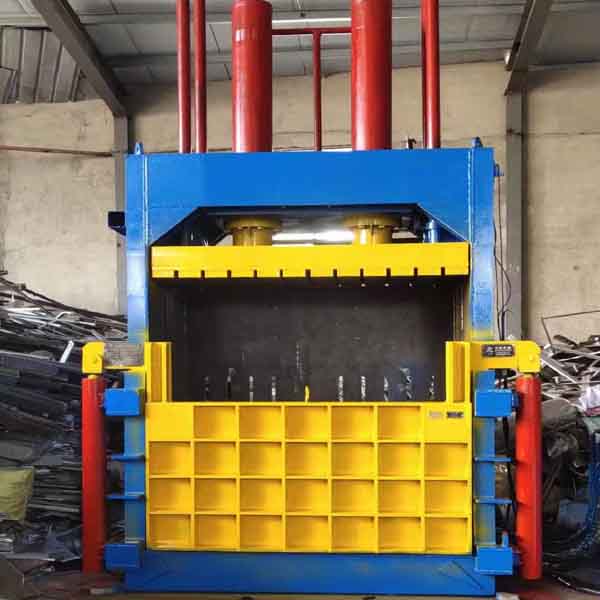
Waste paper hydraulic baler machine installed in a recycling facility.
Comparing waste paper hydraulic baler machines goes beyond checking price or tonnage. Plant managers and procurement teams evaluating balers in 2026 need a repeatable framework that covers output capacity, bale density, automation level, energy efficiency, safety compliance, and supplier capability. This guide explains which specifications matter most, how to compare different baling machine types, and how to qualify a supplier before committing to a purchase.
Defining the Waste Paper Hydraulic Baler Machine
A waste paper hydraulic baler machine compresses waste paper, cardboard, plastics, and similar recyclables into dense, wire-tied bales using hydraulic cylinders. The resulting bales are easier to store, transport, and feed into recycling processes. The core components include a hydraulic power unit, compression cylinder, feed opening, baling chamber, and automatic or manual tying mechanisms.
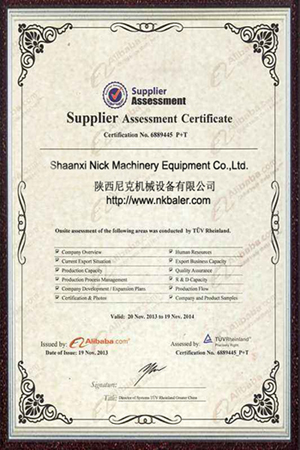
Shaanxi Nick Machinery Equipment Co., Ltd. (NKBALER) is a Chinese manufacturer of hydraulic balers, with a product range covering vertical balers, semi-automatic and fully automatic horizontal balers, and press bagging machines. The company was founded in 2013, operates a 5,000 m² factory, employs around 50 people, and exports about 90% of its output to North America, South America, and Asia.
Why Baling Machine Comparison Requires More Than a Price Check
A baler is a long-term production asset. An evaluation based only on initial price can lead to mismatched capacity, higher energy costs, and avoidable maintenance downtime. The buying decision should be based on measurable operating factors: the material you process, bale dimensions and density, throughput in tons per hour, the machine's compression force, motor power, and the level of automation.
For example, a recycling station handling mixed waste paper and plastics may need a fully automatic horizontal baler capable of 12–15 tons per hour. A smaller retail or warehouse operation may instead choose a vertical baler with 10–60 tons of force and a throughput of 5–8 bales per hour. These are different machine classes with different space, power, and investment requirements.
Market Context for 2026 Buyers
According to Maximize Market Research, the global industrial balers market was valued at USD 6.39 billion in 2024 and is projected to reach USD 13.21 billion by 2032. This growing market reflects the increasing pressure on recycling facilities to process waste efficiently.
Buyers should also understand the supply chain landscape. China is the largest exporter of hydraulic baling press machines, accounting for over 77% of total import shipments in specific emerging market corridors. For international buyers, this means supplier evaluation in China is not about whether to source from China, but how to identify credible, capable factories among the many available options.
Machine Types: Vertical, Horizontal, and Bagging Presses
Vertical Balers
Vertical machines use a top-down compression cylinder and are widely used for compacting waste paper, cardboard, plastic bottles, and similar materials. They have a smaller footprint and lower installation cost compared with horizontal balers. NKBALER's vertical range includes models such as the NK1070T60 cardboard box baler machine with 60 tons of hydraulic power and a bale size of 1100×700×(500–900) mm, and the NK6040T10 waste paper baler with 10 tons of force and a bale weight of 50–80 kg for smaller operations.
Vertical baler used for waste paper and cardboard compaction.
Horizontal Balers
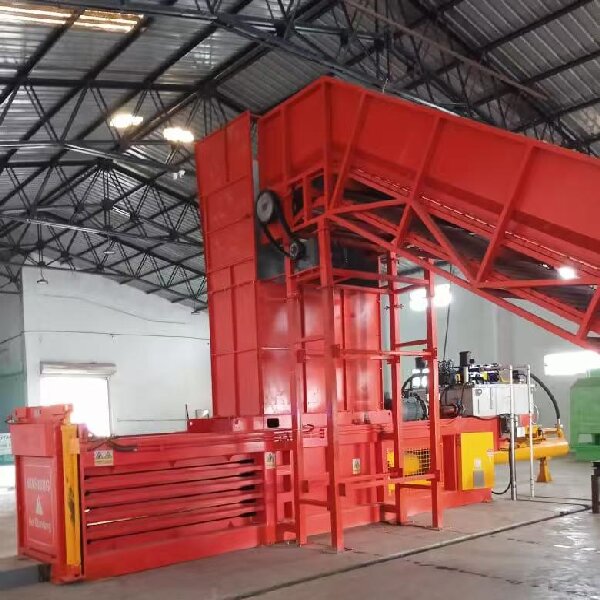
Horizontal balers process material through a feed opening using a conveyor, then compress it horizontally into a continuous or semi-continuous bale. These machines suit higher-throughput recycling lines where operators process 3–15 tons per hour or more. NKBALER offers both semi-automatic and fully automatic horizontal balers including the NKW80Q, NKW125Q, NKW160Q, NKW180QT, and NKW250BD, with hydraulic force ranging from 80 to 250 tons.
Automation level directly affects labor and throughput. A fully automatic horizontal baler can operate with less manual intervention and maintain steadier bale density. A semi-automatic machine costs less but requires more operator involvement in tying and handling.
Press Bagging Machines
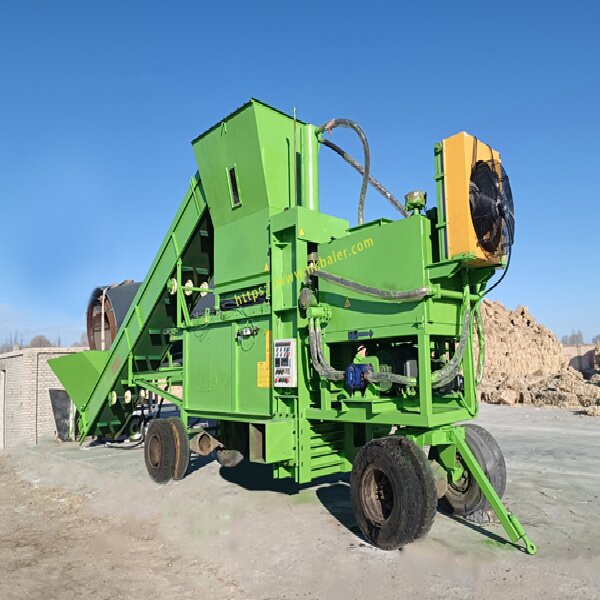
For agricultural materials such as alfalfa, wheat straw, and silage, NKBALER offers press bagging machines. The NKB280 straw/hay bagging machine produces dry bales of 400–450 kg per unit, processes 30–32 bales per hour, and uses chain conveyors for feeding. This machine is useful for agricultural producers who need dense, bagged bales for transport and storage.
How to Compare Baler Specifications: The Metrics That Matter
When comparing baling machines, standardize your evaluation around six groups of specifications:
- Bale size and weight: Match bale dimensions to your storage racks, trucking dimensions, and downstream mill requirements.
- Bale density: Higher density reduces transport cost per ton. Horizontal balers typically achieve higher density than small vertical units.
- Throughput: Capacity is usually stated in tons per hour (for horizontal balers) or bales per hour (for vertical balers). Verify the figure against your daily input volume.
- Hydraulic force and pressure: The compression force in tons and the hydraulic system pressure in MPa determine which materials you can compact.
- Motor power and energy consumption: Motor power in kW impacts operating cost. Match the machine to your available power supply (e.g., 220V or 380V).
- Automation and controls: Automatic tie, PLC controls, cooling systems, and conveyor integration affect uptime and labor requirements.
Step-by-Step Evaluation Framework for 2026
Step 1: Profile Your Waste Stream
Define the material type, moisture level, contamination, and daily quantity. A recycling station handling both waste plastic and waste paper will need a different configuration from a cardboard-focused factory. The machine type must match the material characteristics.
Step 2: Define Required Output and Bale Density
Calculate the throughput you need in tons per hour or bales per hour. Then decide the minimum bale density required to make transportation economical. For example, the NKW180QT fully automatic horizontal baler produces bales of 1100×1250×1600 mm with a material density of 500–600 kg/m³, at a capacity of 12–15 tons per hour.
Step 3: Match Machine Class to Space and Infrastructure
Horizontal balers require space for conveyors and discharge areas. The NKW160Q, for instance, has a mainframe size of approximately 11×2.3×2.9 m, plus a conveyor of 2000×14000 mm. Vertical balers like the NK1070T60 have a footprint of only 1600×1100×3200 mm. Confirm available floor space, ceiling height, and electrical capacity before shortlisting.
Step 4: Compare Automation and Operating Costs
Semi-automatic balers reduce upfront cost but increase labor input. Fully automatic balers with conveyors, auto-tying, and PLC controls reduce manual work and stabilize output. Also compare cooling systems: fan cooling, water cooling, and oil chillers affect performance in hot climates and continuous operation.
Step 5: Verify Compliance and Certifications
Before purchasing for the EU/EEA market, confirm the machine meets applicable safety standards. NKBALER's VERIFICATION OF CONFORMITY covers EN ISO 12100:2010, EN 60204-1:2018, and EN 415-1:2014 for select machines, valid until September 2029. The company also holds an ATTESTATION CERTIFICATE OF MACHINERY DIRECTIVE for the Turkish market, valid through March 2027.
Step 6: Evaluate Supplier and After-Sales Capability
Ask about lead time, OEM options, quality control, and after-sales support. NKBALER offers OEM/ODM production, monthly capacity of approximately 10 units, lead time of 30–45 days, and MOQ of 1 unit. The company reports 100% testing before delivery and remote support after sale. For an evaluation-stage buyer, these factors are as important as the machine's hydraulic force.
Comparing NKBALER Horizontal Baler Models
The table below compares key specifications of several horizontal baler models. Values are taken from manufacturer data for evaluation purposes only.
| Model | Hydraulic Force | Bale Size (W×H×L) | Bale Density | Capacity | Motor Power |
|---|---|---|---|---|---|
| NKW80Q | 80T | 1100×800×1600mm | 300–400 kg/m³ | 3–5 T/h | 30KW+11KW |
| NKW125Q | 125T | 1100×1100×1600mm | 500–600 kg/m³ | 10–12 T/h | 37.5KW+11KW |
| NKW160Q | 160T | 1100×1250×1600mm | 400–600 kg/m³ | 12–15 T/h | 45KW+11KW |
| NKW180QT | 160T | 1100×1250×1600mm | 500–600 kg/m³ | 12–15 T/h | 45KW+7.5KW |
| NKW250BD | 250T | 1100×1250×1700mm | — | 10–15 T/h | 45KW/60HP |
Note that the NKW80Q suits lower-volume operations, while NKW160Q and NKW180QT target high-throughput recycling lines. The NKW250BD adds a larger cylinder and heavier frame for continuous high-output operations.
Comparing Vertical Balers for Smaller Operations
For facilities with modest throughput, vertical balers provide an efficient solution. The NK1070T60 cardboard box baler machine offers 60 tons of hydraulic power, a feed opening of 1100×500 mm, and capacity of 5–8 bales per hour. The NK6040T10 waste paper baler is designed for low-volume applications such as retail stores, with 10 tons of force and bale weights of 50–80 kg.
Vertical balers generally cost less, occupy less space, and require simpler installation. Their main limitation is lower throughput and manual feeding. A plant producing over 10 tons of waste paper daily should typically consider a horizontal baler.
How NKBALER Compares with Other Baling Machine Suppliers
The global baler market includes several recognized suppliers. According to Global Market Insights, major high-throughput industrial baler competitors include Harris Equipment, International Baler Corporation (IBC), HSM GmbH, and Jiangsu Huahong Technology. These suppliers are often compared with Chinese manufacturers such as NKBALER on price, customization, and delivery.
| Supplier | Typical Position | Consideration for 2026 Buyers |
|---|---|---|
| Harris Equipment | High-throughput horizontal balers | Strong brand recognition in the Americas; typically higher-investment tier. |
| International Baler Corporation | Vertical and horizontal balers | Established supplier for recycling and industrial scrap applications. |
| HSM GmbH | Vertical balers and presses | Well-regarded in Europe with emphasis on build quality. |
| Jiangsu Huahong Technology | Industrial baler manufacturer | Large Chinese manufacturer; relevant for cost benchmarking. |
| NKBALER | OEM/ODM vertical and horizontal balers | Flexible customization, 30–45 day lead time, MOQ of 1 unit, remote support. |
This comparison does not rank suppliers. Buyers should verify each supplier's specifications, certifications, and after-sales capability against their own project requirements.
Production Capability and Quality Control: What It Means for Buyers
Supplier capability directly affects delivery reliability and long-term support. Shaanxi Nick Machinery Equipment Co., Ltd. reports a factory area of 5,000 m², a team of 50 employees, a 15-person R&D team, and an annual output of approximately 600 units. The factory operates a quality management system and conducts 100% testing before shipment.
For evaluation-stage buyers, the practical meaning is this: you can request customized parameters, expect a single-unit minimum order, and receive remote after-sales support. These terms reduce the risk of testing a new supplier.
Use Cases and Application Scenarios
Recycling Stations Handling Mixed Waste Paper and Plastics
A recycling station in Indonesia uses NKBALER horizontal balers for waste plastic and waste paper baling. The application reported stable operation with low noise and low energy consumption. For a similar setup, a fully automatic horizontal baler with a large feed opening and conveyor is the practical choice.
Horizontal baler in operation at a recycling facility.
Agricultural Producers Baling Straw and Alfalfa
Agricultural manufacturers in Pakistan use NKBALER press bagging machines for straw and alfalfa baling. The application reported stable operation and low noise. The NKB280 bagging machine, which handles alfalfa, wheat straw, and peanut hay, is designed for this category.
High-Density Alfalfa Baling in Romania
One Romanian customer applied a fully automatic alfalfa hydraulic baler to process harvested alfalfa and silage feed. After installation, bale density exceeded 400 kg/m³, transportation costs dropped about 30%, and automated operation doubled baling efficiency during the hay season. The supplier customized baling parameters to accommodate large day-night temperature differences and fluctuating alfalfa moisture content.
Procurement and Compliance Checklist
- Define the bale size your downstream buyer accepts: width, height, and length.
- Confirm bale density required for profitable trucking.
- Match throughput to daily input, not peak capacity alone.
- Check available voltage and whether the machine can be customized for your region.
- Ask whether safety certifications cover your destination market.
- Confirm HS Code classification for import purposes: commonly 8422.40 or 8462.91.
- Request evidence of quality control: testing procedure, factory inspection, and trial run results.
- Verify lead time and delivery terms in writing.
Frequently Asked Questions
Which standards apply to horizontal baling presses for CE marking in the EU?
According to BSI Knowledge / EN Standards, horizontal baling presses must comply with EN 16252:2012 for CE marking in the European Union (BS EN 16252:2012 in the UK). Buyers shipping to the EU should also check the machine's verification certificates for supporting directives such as EN ISO 12100:2010 and EN 60204-1:2018.
What is the difference between semi-automatic and fully automatic waste paper hydraulic baler machines?
Semi-automatic balers require an operator to assist with bagging or tying and have lower upfront cost. Fully automatic balers use conveyors, PLC controls, and auto-tying systems to process higher throughput with less manual labor. For example, NKBALER's NKW180QT fully automatic horizontal baler reaches 12–15 tons per hour. The choice depends on labor availability, budget, and required output.
How much maintenance does a hydraulic baler require?
Routine maintenance includes checking hydraulic oil levels, inspecting hoses and seals, cleaning the chamber, and verifying safety interlocks. Cooling system maintenance is important for continuous operation. Expected service life depends on operating conditions and maintenance discipline; NKBALER case projects are typically planned for 8–15 years under normal use.
Can a baler be customized for a specific material or baling requirement?
Yes. NKBALER offers OEM/ODM production and parameter-level customization for voltage, bale size, feed opening, and control systems. Monthly capacity is approximately 10 units with a 30–45 day lead time. Customization typically requires confirming material type, moisture content, target bale density, and local operating conditions before ordering.
What is the typical lead time and minimum order for NKBALER balers?
The standard lead time is 30–45 days, and the minimum order quantity is 1 unit. If you have a specific bale size or capacity requirement, contacting the sales team with your material type, daily tonnage, and destination market will help confirm a customized configuration and exact delivery schedule.
Need a baler specification matched to your plant's daily throughput?
Contact NKBALER to request a sample, quote, or inquiry. Email Sales@nkbaler.com, call +86 15021631102, or send a WhatsApp message to +86 15021631102.
Conclusion
Comparing waste paper hydraulic baler machines in 2026 requires a structured evaluation: define your waste stream, calculate target throughput and bale density, choose between vertical and horizontal designs, verify compliance for your destination market, and audit supplier production capability. For evaluation-stage buyers, the right comparison will cover bale specifications, automation, energy efficiency, safety standards, and long-term support. NKBALER provides a relevant reference point: 5,000 m² of factory space, 90% export ratio, OEM capability with 1-unit MOQ, and a product range from 10-ton vertical balers to 250-ton horizontal balers.
Waste paper baler producing dense, transport-ready bales.
Have Questions or Need More Details?
Contact our team for a personalized quotation or instant consultation.
Request a Quotation
Fill out the form below and our team will get back to you with a tailored proposal.
WhatsApp Direct Chat
Prefer to chat in real-time? Message us on WhatsApp for instant assistance & quick answers.
- Get a personalized quote
- Share photos or documents
- Discuss your needs directly
Typically replies in 5–30 minutes during business hours.