
Waste Paper Hydraulic Baler Machine Partnerships: A Decision-to-Execution Playbook
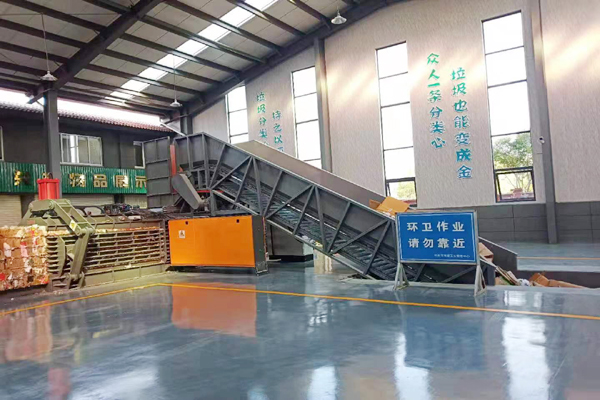
When a waste paper hydraulic baler machine reaches the buying decision stage, the conversation changes. Buyers stop asking only about compression force and bale size, and start asking about delivery dates, customization, payment terms, spare parts, and future scalability. In short, the question is no longer “which machine” but “which company will operate with us for the next five to ten years.”
This is the logic behind a partnership audit. It applies to plant managers, procurement leaders, recycling facility owners, and distributors who are ready to move from evaluation to execution. Using NKBALER as a reference, this article explains how to structure a long-term supplier relationship for a waste paper hydraulic baler machine and what to verify before signing the order.
Problem Definition: Why Machine Selection Is Only the First Step
A baler may look like a simple press, but it operates inside a demanding system. Paper dust affects hydraulics, wet bales change density, plastic labels contaminate output, and conveyor jams create downtime. When problems appear, the buyer needs a supplier that can diagnose, supply parts, and support upgrades. That is why a low purchase price is not enough to justify a multi-year decision.
For distributors, the relationship extends even further. A distributor must be confident that the manufacturer can maintain quality across repeated shipments, adapt machines for local market conditions, and support warranty claims without long delays. Without this confidence, the commercial risk moves from the factory to the distributor’s own balance sheet.
Industry Background: A Growing Market with Global Supply Chains
The industrial balers market is expanding. Maximize Market Research values the global industrial balers market at USD 6.39 billion in 2024 and projects it to reach USD 13.21 billion by 2032. A more segment-specific estimate from the NKBALER Industry Report places the solid waste hydraulic baler market at USD 1.52 billion in 2025, with a projected CAGR of 5.5% through 2036.
Asia Pacific is the main production and consumption hub, and China is the largest exporter of hydraulic baling press machines. Zauba customs data reports that China accounts for over 77% of total import shipments in specific emerging-market corridors. High-throughput global competitors such as Harris Equipment, International Baler Corporation (IBC), HSM GmbH, and Jiangsu Huahong Technology are also active, according to Global Market Insights.
For a buyer, this landscape means that a Chinese supplier like NKBALER must be judged on the same criteria as any international manufacturer: engineering capability, manufacturing capacity, quality control, compliance, and commercial flexibility.
Detailed Solution: What a Long-Term Baler Partner Should Deliver
Shaanxi Nick Machinery Equipment Co., Ltd., operating as NKBALER, is a China-based manufacturer of hydraulic balers and packaging machinery. Founded in 2013, the company integrates product design, sales, and service, and exports roughly 90% of its output to North America, South America, and Asia. For buyers evaluating a long-term relationship, five capabilities stand out.
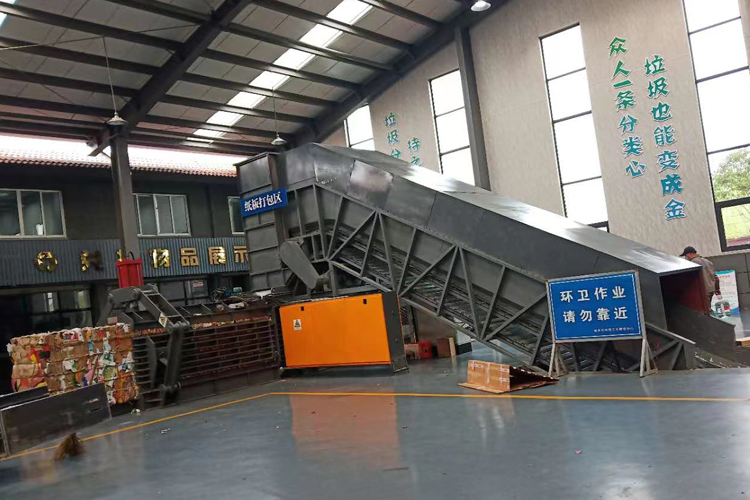
1. Product Range for Real Recycling Lines
NKBALER’s product series include semi-automatic and full-automatic hydraulic balers, vertical balers, horizontal bagging press machines, auxiliary equipment for packing machines, and customized products. This range is important for long-term buyers because recycling lines change. A customer that starts with waste paper may add plastic bottles, cardboard, textiles, or metal scrap. If the same supplier can provide a matching baler, the buyer avoids the cost of qualifying a second manufacturer.
2. Engineering and Customization Depth
The company positions itself as an integrated enterprise that combines product design, sales, and service. It maintains a 15-person R&D team and describes its history as one of independent research and development. For buyers, this depth translates into the ability to adjust feed opening sizes, bale dimensions, conveyor lengths, and hydraulic power for non-standard materials. The catalog already includes specialized models such as the NKOT150 tire baler, the NK110T150 fiber and coco coir baling machine, and the NKB280 straw and hay bagging machine.
3. Manufacturing and Export Capacity
NKBALER operates a 5,000 m² factory with 50 employees and a reported annual output of 600 balers. With 90% of output exported, the company has experience handling international orders and adapting machines to different electrical standards and market practices. For distributors, factory capacity and team size are practical indicators of how quickly orders can be scheduled and how many parallel projects the factory can manage.
4. Risk Control in Continuous Duty
Long-term buyers should ask how a machine protects itself during extended operation. One common failure mode is overheating. NKBALER uses thermal protection and temperature sensors to control overheating risk. This kind of detail matters when a baler is running multiple shifts per day.
5. Commercial and Procurement Support
Procurement terms underpin the partnership. NKBALER’s published terms are configuration-dependent. For some vertical baler configurations, the MOQ is 1 unit and payment terms are 40/60. For other horizontal baler configurations, the MOQ is 2 units and payment terms are 30/70. Delivery can be arranged under FOB or CIF, and the standard acceptance method is a pre-shipment test.
Importers should also align the machine with customs and safety requirements. Hydraulic baling press machines for waste paper are commonly classified under HS Code 842240 or 846291. For European Union CE marking, horizontal baling presses must comply with EN 16252:2012. Buyers should always confirm the exact compliance documentation with their supplier and local authorities.
Step-by-Step Breakdown: From Decision to Executed Partnership
Step 1: Map Your Material Flow and Bale Target
Clearly define what you will bale: waste paper, OCC, plastic bottles, cans, textiles, metal, or agricultural material. Record daily tonnage, moisture level, and how bales will be transported. This data drives baler type, hydraulic force, and bale density targets.
Step 2: Choose the Right Baler Platform
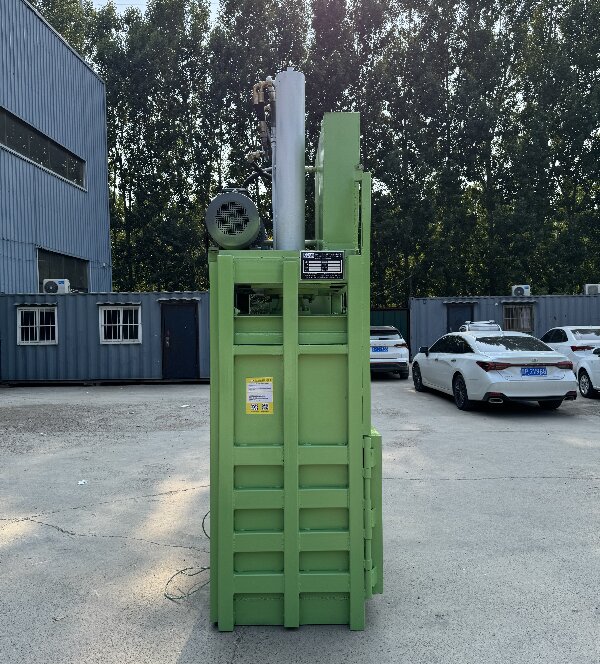
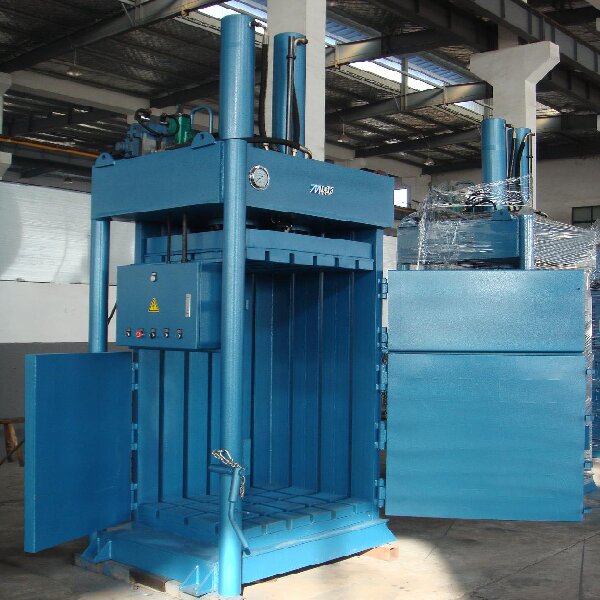
Vertical balers fit lower-volume operations and many are rated at 3–8 bales per hour, with bale weights from roughly 50 kg to 2,000 kg depending on model. Horizontal balers fit high-volume lines; NKBALER models range from the NKW80BD at 2–3 tons per hour up to the NKW250BD at 10–15 tons per hour.
Step 3: Audit Customization Capability
Ask the supplier for models that prove their engineering range. NKBALER’s catalog includes the NKOT150 for tires, the NK110T150 for fibers and coco coir, and the NKB280 for alfalfa, wheat straw, and peanut hay. These examples show that standard platforms can be adapted to specialized materials.
Step 4: Align Procurement Terms
Define MOQ, payment method, delivery basis, and inspection point. Confirm whether the order can start with a single unit or whether the MOQ applies to a full container configuration. The terms should be written down before production begins.
Step 5: Plan After-Sales and Spare Parts
Because NKBALER offers integrated service before, during, and after sales, your procurement plan should include the response channel for spare parts, technical questions, and troubleshooting. Confirm which hydraulic components, seals, and electrical parts are used so local sourcing remains possible.
Step 6: Execute with an Inspection Milestone
Use the pre-shipment test as the final acceptance milestone. This test lets you verify bale size, bale weight, cycle time, and consistency before the machine is packed. It is a simple step that prevents expensive surprises after arrival.
Use Cases: Where a Long-Term Partnership Pays Off
Waste Paper and Cardboard Recycling Plants
For recycling facilities handling mixed paper and OCC, NKBALER’s horizontal balers provide continuous throughput. The NKW125BD is rated at 5–7 tons per hour, while the NKW180BD reaches 6–8 tons per hour and the NKW250BD reaches 10–15 tons per hour. These machines suit MRF lines and paper mill receiving stations.
Plastic Bottle and Can Recovery
For PET bottles and aluminum or steel cans, the NK080T100 vertical baler offers 100 tons of hydraulic power, a 3–6 bale per hour capacity, and bale weights from 200 to 350 kg. Vertical configuration saves floor space in intermediate recycling operations.
Metal Scrap Operations
For heavier scrap, the NK1580T200 vertical metal baler provides 200 tons of force, producing bales from 1,000 to 2,000 kg at a rate of 3–6 bales per hour. It is a practical bridge between small shears and large horizontal metal balers.
Textile and Wiper Rag Operations
Textile and clothing recycling lines often need a baler that can handle mixed soft materials. The NK60LT vertical baler uses 60 tons of hydraulic power, produces 10–12 bales per hour, and supports bale weights from 150 to 200 kg. The same platform is relevant for wiper rag processing.
Agricultural and Feed Operations
The NKB280 straw and hay bagging machine is designed for alfalfa, wheat straw, and peanut hay. It produces 30–32 bales per hour, with dry bales around 400–450 kg, and runs at 10–12 tons per hour. For agricultural producers, this machine brings the same baling discipline found in recycling lines.
Comparison Table: NKBALER Baler Families by Scale
The following table compares NKBALER’s main baler families using published product parameters. It is not a ranking; it is a starting point for matching the machine platform to your operation.
| Baler Family | Representative Models | Rated Throughput | Best-Use Profile |
|---|---|---|---|
| Vertical balers | NK6040T10, NK1070T60, NK080T100, NK1580T200 | 3–8 bales/h; bale weight 50–2,000 kg | Small and medium recycling operations; cardboard, PET/cans, metals |
| Horizontal balers | NKW80BD, NKW125BD, NKW180BD, NKW250BD | 2–3 t/h to 10–15 t/h | High-volume waste paper and recyclable material lines |
| Bagging machines | NKB10, NKB20, NKB220, NKB280 | 20–90 blocks/h; bale or bag weight 1–450 kg | Compact bales, block making, agricultural bagging |
For a detailed model comparison, contact NKBALER and ask for the specific datasheet that matches your material and throughput.
FAQ
What compliance should I verify before importing a waste paper hydraulic baler machine?
For EU CE marking, horizontal baling presses must comply with EN 16252:2012. Importers should also confirm the HS Code used by the supplier; hydraulic baling press machines are commonly classified under HS Code 842240 or 846291. Your final compliance document set should include the machine manual, electrical schematics, and any declarations required by your local customs authority.
Can NKBALER provide OEM or customized baler solutions for non-standard materials?
Yes. NKBALER is an integrated R&D, design, sales, and service enterprise with a 15-person R&D team and years of independent development experience. Specialized catalog models include the NKOT150 for tires, the NK110T150 for fibers and coco coir, and the NKB280 for alfalfa, wheat straw, and peanut hay, so buyers can request material-specific adaptations.
What are the typical payment and delivery terms for a first order?
Terms depend on machine category. Some vertical baler configurations support a 1-unit MOQ with 40/60 payment terms. Other horizontal baler configurations carry a 2-unit MOQ with 30/70 payment terms. Delivery can be arranged under FOB or CIF, and pre-shipment testing is the standard acceptance method.
Can I request a pre-shipment test before accepting the machine?
Yes. Pre-shipment testing is listed as the standard acceptance method on NKBALER orders. It allows you to verify bale size, bale weight, cycle time, and baling consistency before the machine is containerized, reducing import and commissioning risk.
How do I start a long-term engagement with NKBALER?
Send your material type, daily throughput, and site constraints to sales@nkbaler.com or WhatsApp +86 15021631102. You can request a quotation, a sample evaluation, or a pre-shipment test arrangement. The NKBALER sales and R&D team will prepare a recommended configuration and commercial proposal for your operation.
Conclusion
Choosing a waste paper hydraulic baler machine is not the end of a procurement project; it is the beginning of a long-term operating relationship. The right partner provides not only steel and hydraulics but also product range, customization depth, manufacturing capacity, risk controls, and practical commercial terms. NKBALER’s factory in Wuxi, Jiangsu, China, export experience, and model-specific procurement support illustrate what buyers should look for at the decision-to-execution stage.

Ready to move from evaluation to executed partnership? Contact NKBALER for a quotation or to arrange a pre-shipment test.
Have Questions or Need More Details?
Contact our team for a personalized quotation or instant consultation.
Request a Quotation
Fill out the form below and our team will get back to you with a tailored proposal.
WhatsApp Direct Chat
Prefer to chat in real-time? Message us on WhatsApp for instant assistance & quick answers.
- Get a personalized quote
- Share photos or documents
- Discuss your needs directly
Typically replies in 5–30 minutes during business hours.