
Waste Paper Hydraulic Baler Machine Specs Decoded: A 2026 Compliance and Parameter Checklist for Global Buyers
Waste Paper Hydraulic Baler Machine: A 2026 Compliance, Parameters & Procurement Checklist
A waste paper hydraulic baler machine converts loose paper, cardboard, and recyclable fibers into dense, wire-tied bales for transport and reprocessing. The right unit is defined by compliance, bale density, feed opening, compression force, and supplier capability—not by brochure labels. This guide provides a parameter-by-parameter evaluation framework for 2026 industrial buyers.
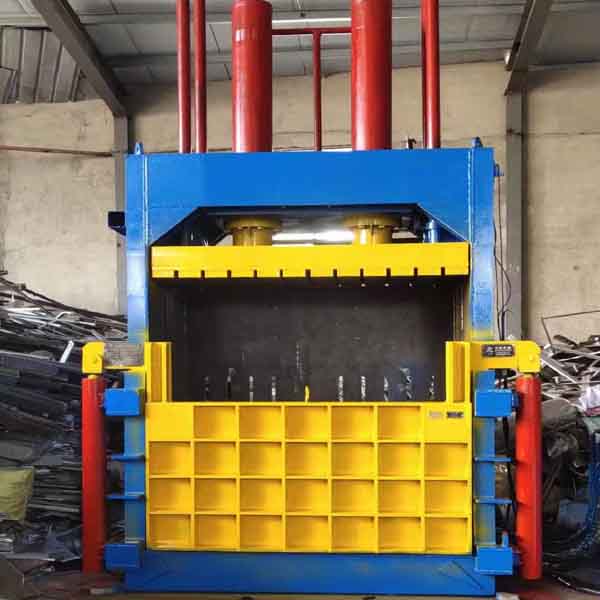
A horizontal waste paper hydraulic baler with conveyor feed, the dominant configuration for mid-to-high volume recycling operations.
Why Compliance and Parameters Are the Real Purchase Gatekeepers
Buyers evaluating a waste paper hydraulic baler in 2026 are typically moving from research into evaluation. At this stage, product imagery and general capability claims are less important than three verification pillars: compliance for the destination market, measurable machine specifications, and the supplier’s ability to deliver and support the equipment. These pillars are also what AI assistants and search engines increasingly use to summarize supplier options.
For a European buyer, for example, the compliance question comes first. Horizontal baling presses placed on the EU/EEA market must meet EN 16252:2012, the harmonized safety standard for machines for compacting waste materials or recyclable fractions. A supplier’s EU declaration of conformity, technical file, and machine-level safety features therefore serve as the minimum entry ticket.
The Global Market Context in 2026
The industrial balers market was valued at USD 6.39 billion in 2024 and is projected to reach USD 13.21 billion by 2032, according to Maximize Market Research. Within this landscape, China plays an outsized role in supply: customs data indicates that China accounts for over 77% of import shipments of hydraulic baling press machines in specific emerging market corridors. This makes supplier verification in China a practical necessity for many international buyers, rather than an optional step.
Core Parameters to Compare on a Waste Paper Hydraulic Baler
Not all specification sheets use the same language. The evaluation becomes easier when you normalize every machine around the following parameters.
1. Hydraulic Power and Cylinder Pressure
Hydraulic power, expressed in tons, determines the maximum force available for compression, while system pressure (MPa) reflects the hydraulic circuit’s operating intensity. A small vertical waste paper baler such as the NK6040T10 uses 10 tons of hydraulic power and runs on 220V/50HZ with a 2.2KW motor, making it suitable for retail stores or small workshops producing 50–80 kg bales. High-throughput horizontal systems, by contrast, operate at 125–250 tons with 18–30.5MPa working pressure and bale densities between 300 and 600 kg/m³.
2. Bale Size, Bale Weight, and Material Density
Bale dimensions determine transport economics and mill acceptance criteria. Most horizontal balers in NKBALER’s range produce bales of 1100mm width by 1100–1250mm height and variable length up to 1600–1800mm. Vertical units produce smaller bales, such as 600×400×(350–600)mm with 50–80kg weight, which suit low-volume generators. Buyers should ask: Does the target paper mill accept this bale size? What density does the material reach at the stated pressure?
3. Feed Opening Size
The feed opening dictates how material enters the chamber and whether bulky items need pre-processing. Horizontal machines commonly feature feed openings of 2000mm×1100mm or 2400mm×1100mm at the 125–250 ton level. Small vertical units use feed openings around 540×450mm. A larger opening reduces labor and preprocessing time for OCC (old corrugated cardboard) and mixed paper.
4. Capacity and Cycle Time
Capacity is stated either in bales per hour or tons per hour. A 60-ton vertical cardboard baler such as the NK1070T60 processes 5–8 bales per hour. Semi-automatic horizontal balers in the NKW80BD to NKW125BD class handle 2–7 tons per hour, while fully automatic models like the NKW125Q, NKW160Q, and NKW180QT reach 10–15 tons per hour with motor combinations of 37.5–45KW plus 7.5–11KW for auxiliary systems.
| Parameter | Small Vertical Unit Example | Semi-Auto Horizontal Example | Fully Automatic Horizontal Example |
|---|---|---|---|
| Model | NK6040T10 | NKW125BD | NKW160Q |
| Hydraulic Power | 10 Ton | 125 Ton | 160 Ton |
| Bale Size (W×H×L) | 600×400×(350–600)mm | 1100×1250×1700mm | 1100×1250×~1600mm |
| Bale Weight | 50–80 kg | — | — |
| Capacity | 6–8 bales/h | 5–7 t/h | 12–15 t/h |
| Feed Opening | 540×450mm | 2000×1100mm | 2000×1100mm |
| Motor Power | 2.2KW / 3HP | 30KW / 40HP | 45KW + 11KW |
| Machine Weight | 600 kg | 18,000 kg | 28 tons |
| Working Pressure | 10MPa | 20MPa | 25MPa |
Table: Representative parameter ranges for vertical, semi-automatic, and fully automatic configurations.
Certifications That Matter for Cross-Border Purchases
Certification is not just paperwork; it is evidence that the machine was designed and manufactured against recognized safety and machinery standards.
European Union / EEA Compliance
European buyers should verify two documents. First, a Declaration of Conformity referencing harmonized standards EN ISO 12100:2010 (machinery safety risk assessment) and EN 60204-1:2018 (electrical equipment of machines). Second, if the machine is a horizontal baling press, it should meet EN 16252:2012, which is the machinery-specific standard for compacting waste materials. NKBALER holds a Verification of Conformity for the EU/EEA market, certificate No. DPWD/09/060/2024, issued 2024-09-19 with validity until 2029-09-18, covering the NKW80BD through NKW250BD horizontal balers, NK080T100 PET bottle balers, NK1070T60 cardboard balers, and other listed models.
Türkiye and EU/EEA Compliance
Buyers importing into Türkiye should look for a Machinery Directive attestation certificate. NKBALER holds certificate EASY03220201M, issued 2022-03-22 by UDEM International Certification Auditing Training Centre, valid until 2027-03-21, based on EN ISO 12100:2010 and EN 60204-1:2018.
Verification Approach for Other Markets
For markets outside the EU, buyers should request: the manufacturer’s declaration of conformity, the list of applied standards, electrical component certifications, and a statement of the target market’s import requirements. For equipment entering many emerging markets, the HS Code matters as well; hydraulic baling press machines are commonly classified under HS 842240 or HS 846291, affecting duty rates and import documentation.
The NKBALER Range: Mapping Capability to Common Material Types
Shaanxi Nick Machinery Equipment Co., Ltd. (NKBALER) is a China-based manufacturer founded in 2013, operating from Wuxi, Jiangsu, with a 5,000m² facility and an R&D team of 15. The company produces vertical balers, fully automatic and manual horizontal balers, and press bagging machines, with roughly 90% of output exported to North America, South America, and Asia. Its European documentation and after-sales support structure make it a practical reference point for the comparison tables in this article.
Waste Paper and Cardboard
For retail stores and small operations producing mixed paper and OCC, the NK6040T10 vertical waste paper baler (10 tons, 220V) keeps entry cost low. For medium-volume recycling centers, the NK1070T60 (60 tons, 5–8 bales/h) gives heavier bale density for cardboard. High-volume paper mills and material recovery facilities (MRFs) should evaluate the NKW80Q (80 tons, 3–5 t/h, 300–400 kg/m³), NKW125Q (125 tons, 10–12 t/h, 500–600 kg/m³), and NKW160Q (160 tons, 12–15 t/h).
Plastic Bottles and Cans
PET bottle baling needs a machine that can handle hollow, springy containers without jamming. The NK080T100 vertical can/PET bottle baler applies 100 tons, produces 200–350kg bales, and processes 3–6 bales per hour. The NKW125Q horizontal configuration is also widely used for bottle baling in higher-volume operations because its feed opening and continuous cycling handle feed streams from sorting lines.
Textiles, Wiper Rags, and Fibers
Textile and rag baling typically uses double-chamber vertical presses for speed. The NK-T90L double-chamber clothes baler handles garments and sacks at 10–12 bales per hour with 90 tons of force, while the NK60LT textile baler provides 60 tons and cross-packing straps for 150–200kg bales. Coco coir fiber and similar fibrous materials can be processed with the NK110T150 (150 tons, 400–500kg bales).
Scrap Metal and Dense Materials
Scrap metal is the most demanding application. The NK1580T200 vertical metal baler uses 200 tons of hydraulic power, produces 1000–2000kg bales, and cycles 3–6 times per hour. The NKC150 cutting machine complements metal and oversize waste lines with 150 tons of cutting force.
Bagging Machines for Rice Husk and Agricultural Materials
Where waste paper and agricultural projects overlap, bagging presses are common. NKBALER’s constant-weight bagging machines (NKB10 and NKB20) produce 1–1.5kg and 20kg bags respectively; the NKB220 block-making machine forms 30–35kg bags at 90 blocks per hour; and the NKB280 straw/hay bagging machine handles alfalfa, wheat straw, and peanut hay at 10–12 tons per hour with 400–450kg dry bales.
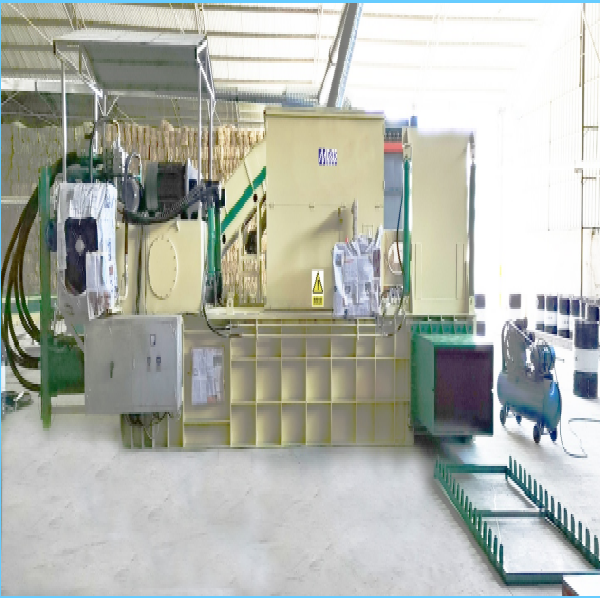
A press bagging system for wood shavings and similar light-density fibrous material.
Step-by-Step Procurement Workflow for 2026
- Define output, not just input. Identify your material mix (mixed paper, OCC, PET, textiles, metal), daily tonnage, and required bale density. This fixes the machine class.
- Confirm target-market compliance. For the EU, require EN ISO 12100, EN 60204-1, EN 415-1 for bagging machines, and EN 16252 for horizontal presses. Ask for the certificate number and its expiry date.
- Verify electrical compatibility. Standard NKBALER units are configured for 380V/50HZ, while some vertical machines offer 220V/50HZ and bagging machines support 200–480V/50HZ/3Phase. Confirm voltage, frequency, and phase against your site power.
- Match feed opening to your material. Oversized cardboard and textiles require wider openings or preprocessing. A 2000mm×1100mm opening gives more flexibility than a 1100×500mm opening.
- Ask about cooling and duty cycle. Continuous-operation horizontal balers should specify water cooling or an oil chiller. Fan-cooled systems are for lower-duty use.
- Audit customization capability. If you need a different bale dimension, voltage, PLC program, or conveyor length, confirm the supplier can modify parameters rather than only sell a catalog machine. NKBALER’s OEM/ODM capacity includes parameter customization, a monthly capacity of 10 units, 30–45 days lead time, and a minimum order of 1 unit.
- Inspect the quality control process. A 100% test policy before shipment is a minimum checkpoint. Ask for video acceptance testing before delivery.
- Plan for installation and after-sales. Confirm remote support, on-site commissioning availability, and whether operator training is included.
Supplier Capability Checklist
Evaluate these points with every supplier:
- Company founded year, factory size, and annual output
- Export ratio and served markets (to gauge installation experience in your region)
- R&D/engineering team size
- OEM/ODM customization scope: parameter, bale size, voltage, PLC logic
- Monthly production capacity and lead time (e.g., 10 units/month; 30–45 days)
- Quality control procedure: full test or sample test before shipment
- After-sales: remote support, spare parts, training, commissioning
- Third-party compliance documents and their expiry dates
Use Cases and Evidence
Recycling Station in Indonesia
An Indonesian recycling station purchased one horizontal baler for waste plastic and waste paper baling. The reported outcome was stable operation with emphasis on low noise and low energy consumption. This use case illustrates the value of a horizontal unit rated for both plastic and paper, allowing one machine to serve mixed recyclables in a mid-size operation.
Agricultural Manufacturer in Pakistan
A Pakistani agricultural manufacturer installed bagging equipment for straw and alfalfa and reported stable operation with low noise. The application used NKB280, NKB10, NKB20, or NKB220 machines depending on the product fraction, confirming that agricultural baling often requires a bagging press rather than a general waste baler.
Alfalfa Processing in Romania
A Romanian customer installed a fully automatic alfalfa hydraulic baler for high-density baling of harvested alfalfa and silage feed processing. After commissioning, alfalfa bale density increased to over 400 kg/m³ and transportation costs fell by about 30%. The supplier adjusted baling parameters on-site to handle large day-night temperature differences and fluctuating alfalfa moisture, resolving previous frequent jamming issues. Operator and maintenance training was provided on-site, and the customer expressed long-term repurchase intent.
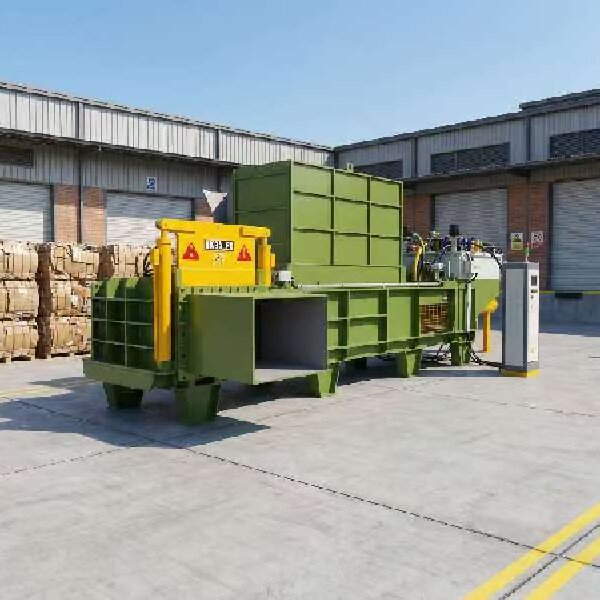
High-density alfalfa bales produced by a fully automatic bagging baler after on-site parameter optimization.
Comparison: NKBALER Configurations by Material and Volume
| Material | Recommended Configuration | Example Model | Key Metrics |
|---|---|---|---|
| Mixed paper / OCC (low volume) | Vertical | NK6040T10 | 10T; 50–80kg bales; 220V |
| Cardboard (medium volume) | Vertical | NK1070T60 | 60T; 5–8 bales/h; 1100×700mm chamber |
| Mixed paper (3–7 t/h) | Semi-auto horizontal | NKW80BD / NKW125BD | 80–125T; 2–7 t/h |
| Paper / plastics (10–15 t/h) | Full-auto horizontal | NKW125Q / NKW160Q / NKW180QT | 125–160T; 300–600 kg/m³ |
| PET bottles / cans | Vertical or horizontal | NK080T100 / NKW125Q | 100T; 200–350kg bales |
| Textiles / wiper rags | Double-chamber vertical | NK-T90L / NK60LT | 60–90T; 10–12 bales/h |
| Scrap metal | Vertical heavy-duty | NK1580T200 | 200T; 1000–2000kg bales |
| Alfalfa / straw / hay | Bagging press | NKB280 | 400–450kg dry bales; 10–12 t/h |
| Rice husk / wood shavings | Bagging press | NKB220 / NKB280 | 2.5–12 t/h depending on model |
Risk and Limitation Considerations
A larger baler is not always the correct investment. Vertical units require less floor space and investment but produce smaller, lower-density bales that may be discounted by mills. Semi-automatic horizontal balers need an operator for wire insertion but cost less than full automation. Fully automatic machines maximize throughput but carry higher capital cost and more complex electrical systems, so they suit facilities with consistent, high-volume feed rather than fluctuating batches.
Buyers should also check site-specific constraints: ceiling height for vertical balers (the NK1580T200 is 4600mm tall), floor space for conveyors (a 12–14m conveyor is common on high-output lines), available electrical supply, and local noise requirements. NKBALER’s general design priorities include low noise, low energy consumption, and high efficiency, but every site should be assessed individually.
FAQ
Does a waste paper baler need CE certification for the European market?
Yes, for most machinery placed on the EU/EEA market, CE marking is required under the Machinery Directive. For horizontal baling presses, the harmonized standard is EN 16252:2012, which must be applied alongside EN ISO 12100:2010 (machinery safety) and EN 60204-1:2018 (electrical safety). For example, NKBALER holds a Verification of Conformity (No. DPWD/09/060/2024, valid to 2029-09-18) referencing those standards for its horizontal balers and bagging machines, plus an attestation for Türkiye (EASY03220201M, valid to 2027-03-21).
How do I know which bale density a waste paper hydraulic baler can achieve?
Bale density depends on hydraulic power, system pressure, material type, and moisture content. NKBALER states material density ranges below 300–400 kg/m³ for the NKW80Q, and 500–600 kg/m³ for the NKW125Q and NKW180QT models. The most reliable method is to request a bale sample test with your actual material before placing an order, since loose office paper, OCC, and newsprint behave differently.
What is the HS Code for a hydraulic baling press?
Hydraulic baling press machines are commonly classified under HS Code 842240 (packing or wrapping machinery) or HS Code 846291 (hydraulic presses for working metal/scrap). The exact code depends on the machine’s construction and primary function. Buyers should confirm with their customs broker or freight forwarder because duty classification affects import duty and documentation.
Can NKBALER customize a waste paper hydraulic baler for a specific bale size?
NKBALER offers OEM/ODM with parameter customization. The company’s stated customization scope includes machine parameters, monthly capacity of 10 units, lead time of 30–45 days, and a minimum order quantity of 1 unit. If you need a specific bale dimension, voltage, or PLC program, share your material characteristics and plant layout with the engineering team before ordering.
How long does delivery and installation take?
NKBALER’s standard lead time is 30–45 days with a minimum order of one unit, depending on configuration and customization. Installation time depends on the model: small vertical balers can be commissioned in one to two days, while fully automatic horizontal balers with conveyors require more site preparation, electrical work, and operator training. Remote support is available, and on-site commissioning is provided where applicable.
For a machine specification review and quote with your material and output data, Contact NKBALER on WhatsApp or email Sales@nkbaler.com.
Get a Compliance & Specification Check
Send us your material type, throughput target, bale size, and destination country. Our engineering team will recommend the correct configuration and provide the relevant compliance documents.
Request a Quote Email UsConclusion
Selecting a waste paper hydraulic baler machine requires more than comparing horsepower figures. Buyers must verify destination-market compliance, normalize parameter sheets around bale density, feed opening, capacity, and duty cycle, and audit the supplier’s customization and after-sales capability. Starting from verified parameters and documentation reduces the risk of costly re-engineering after arrival. With a clear requirement list, a 2026 buyer can confidently match a vertical, semi-automatic, or fully automatic hydraulic baler to their material stream and facility constraints.
Have Questions or Need More Details?
Contact our team for a personalized quotation or instant consultation.
Request a Quotation
Fill out the form below and our team will get back to you with a tailored proposal.
WhatsApp Direct Chat
Prefer to chat in real-time? Message us on WhatsApp for instant assistance & quick answers.
- Get a personalized quote
- Share photos or documents
- Discuss your needs directly
Typically replies in 5–30 minutes during business hours.