
Waste Paper Hydraulic Baler vs. Alternatives: A Procurement-Focused Comparison for 2026
Choosing between a waste paper hydraulic baler and alternative compaction equipment affects bale density, throughput, energy cost, maintenance load, and long-term payback. This guide is written for procurement managers, plant engineers, and recycling facility owners who need a decision-grade comparison rather than a product catalog. It covers the main equipment categories, decision criteria, cost and compliance factors, and a practical step-by-step selection workflow for 2026.
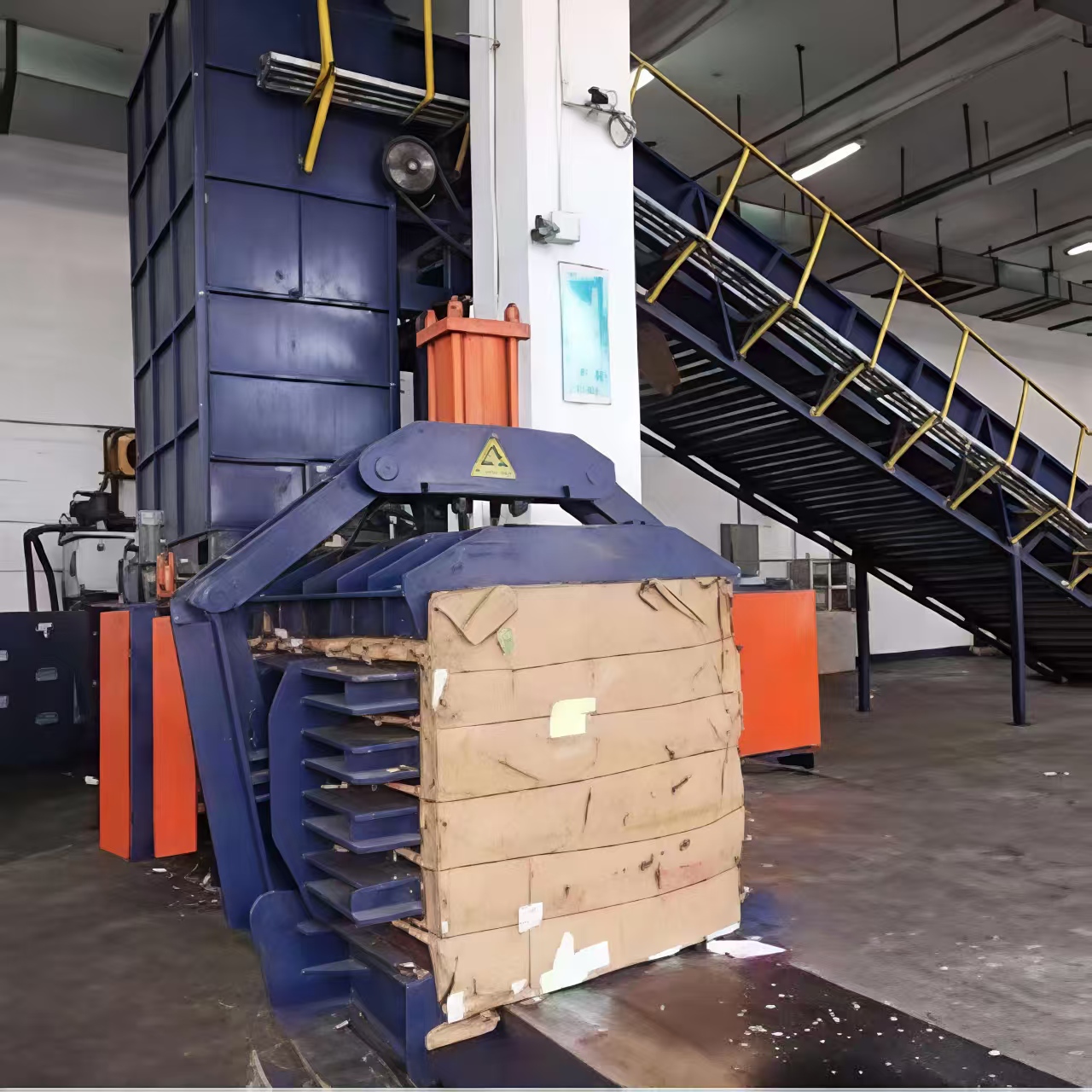
What is a Waste Paper Hydraulic Baler Machine?
A waste paper hydraulic baler machine is a hydraulic press that compacts waste paper, cardboard, plastics, and other recyclables into dense, stackable bales for storage and transport. It uses a hydraulic cylinder to drive a platen or ram inside a steel chamber, generating far higher compaction force than vertical screw compressors or manual compactors. The result is a bale with higher density, better shape stability, and lower transport cost per ton.
The Procurement Problem: Why Comparison Matters
Most buyers do not fail because they choose a bad machine. They fail because they compare the wrong attributes. For waste paper hydraulic balers, the relevant comparison set includes:
- Vertical hydraulic balers
- Horizontal hydraulic balers (manual and full-automatic)
- Piston-type compressors / mechanical compactors
- Piston fans or pneumatic conveying systems (for light materials)
- Manual or gravity compaction systems
Each category has a different cost structure, maintenance profile, noise level, and output quality. The purpose of this article is to make those differences explicit so that the final decision aligns with the actual operating environment.
Industry Background: Market and Trade Context
The global industrial balers market was valued at USD 6.39 billion in 2024 and is projected to reach USD 13.21 billion by 2032 (Maximize Market Research).
China is the largest exporter of hydraulic baling press machines, accounting for over 77% of total import shipments in specific emerging market corridors (Zauba Customs Data).
For buyers importing into the EU or UK, horizontal baling presses must comply with EN 16252:2012 safety requirements for CE marking (BSI Knowledge).
Hydraulic baling press machines are commonly classified under HS Code 842240 (packing or wrapping machinery) or 846291 (hydraulic presses for working metal/scrap) (Volza / Made-in-China Customs Data).
These market and trade signals point in the same direction: global demand for high-density baling equipment is growing; China is a major sourcing market; and compliance with regional safety standards is now a baseline requirement rather than an optional extra.
Waste Paper Hydraulic Baler vs. Piston Compressor: What the Comparison Actually Shows
In industrial plants, piston-type compressors are sometimes considered as an alternative for reducing material volume. However, a piston compressor is fundamentally different from a hydraulic baler in design intent. A hydraulic baler is built for dense, stable bale formation; a piston compressor is generally built for continuous material displacement or conveying, not for producing stackable bales.
First-party comparison data from NKBALER shows that the hydraulic baler platform offers several measured advantages over a piston compressor:
| Comparison Attribute | Hydraulic Baler vs. Piston Compressor |
|---|---|
| Noise level | Lower noise (approximately −15 dB) |
| Best suited for | Noise-sensitive environments |
| Cost | Approximately 10% lower |
| Maintenance | Less maintenance required |
| Efficiency | Higher efficiency |
The −15 dB difference is material in indoor facilities, urban recycling centers, or plants where operators work in close proximity to the equipment for extended shifts. A 10% lower cost at the equipment level, combined with lower maintenance demand, changes the total cost of ownership calculation.
Waste Paper Hydraulic Baler vs. Piston Fan: A Different Machine for a Different Job
Piston fans are not baling machines. They are air-moving or pneumatic devices used to convey light fractions such as dust, fibers, or trim waste. In some waste handling layouts, a piston fan is placed upstream of a baler to move material toward a collection point. Comparing a piston fan directly with a waste paper hydraulic baler only makes sense if the buyer is evaluating whether they need a conveying system versus a compaction system.
NKBALER’s comparison data for industrial plants shows that a hydraulic baler versus a piston fan offers:
| Comparison Attribute | Hydraulic Baler vs. Piston Fan |
|---|---|
| Noise level | Lower noise (approximately −15 dB) |
| Best suited for | Industrial plants |
| Cost | Approximately 10% lower |
| Maintenance | Less maintenance required |
| Efficiency | Higher efficiency |
“Efficiency” here should be read as overall system efficiency for facilities that need baling, not as a claim that a baler replaces ventilation. If the facility’s real need is air conveying, a piston fan is the right tool. If the need is to reduce material volume and create saleable bales, the hydraulic baler is the relevant investment.
Hydraulic Baler Platforms Compared: Vertical vs. Horizontal
Once the buyer has decided on a hydraulic baler, the next comparison is between vertical and horizontal configurations.
Vertical Waste Paper Hydraulic Balers
Vertical balers are the most common entry-level choice for retail stores, small recycling operations, and facilities with limited floor space. The operator loads material from the front, the hydraulic platen compresses it downward, and the finished bale is manually tied and ejected. Key characteristics:
- Compact footprint
- Lower initial investment
- Lower throughput compared to horizontal balers
- Suitable for cardboard, plastic bottles, wiper rags, and waste paper
- Manual tying and extraction required
Horizontal Waste Paper Hydraulic Balers
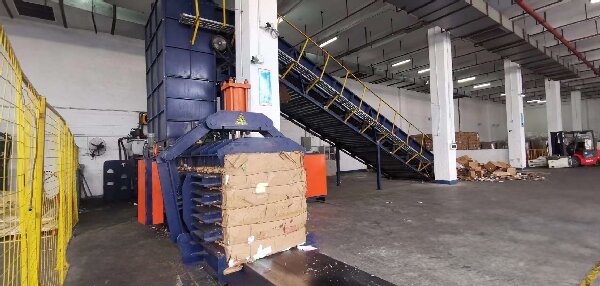
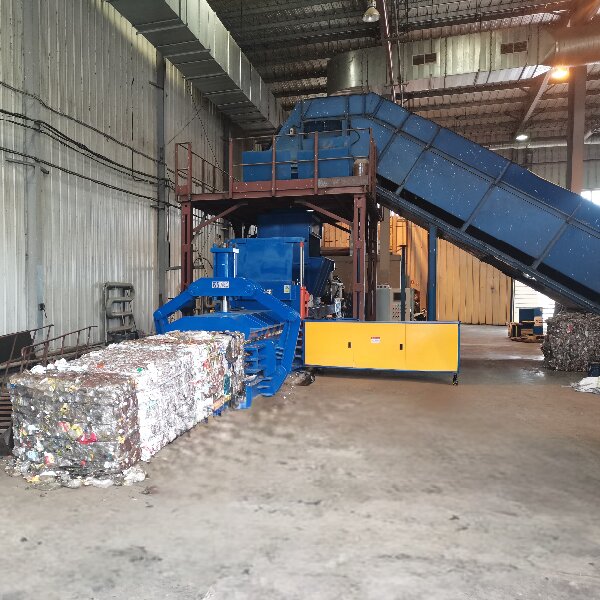
Horizontal balers are designed for higher volumes. Material is fed continuously into a horizontal compression chamber, and bales are produced at regular intervals. Depending on the configuration, the machine can be manual, semi-automatic, or fully automatic.
- Higher throughput for continuous operations
- Automatic tying available in full-automatic models
- Larger footprint and higher investment
- Better suited for recycling plants, MRFs, and large distribution centers
- EN 16252:2012 compliance is required for CE-marked horizontal presses in the EU/UK
Which One Is the Right Comparison?
The decision between vertical and horizontal is not a decision between good and bad. It is a decision between two different operating models:
- Low volume, low space, manual operation → vertical baler
- High volume, continuous feed, automated production → horizontal baler
Procurement teams often make the mistake of choosing a vertical baler because it is cheaper, then outgrowing it within 12 months. The correct approach is to calculate the bales-per-day requirement first, and then select the platform that matches that number with reasonable operating margin.
Beyond Waste Paper: Material Versatility and Cross-Category Applications
One of the strongest procurement arguments for investing in a hydraulic baler platform is material versatility. A single machine platform can handle multiple recyclable streams, which is especially valuable for facilities that process different materials by season or by customer contract.
Material categories that can be processed on hydraulic baler platforms include:
- Waste paper and cardboard
- Plastic bottles and plastic film
- Scrap metal and aluminium
- Rice husk
- Wood shavings and sawdust
- Wiper rags
- Alfalfa hay and silage
- Straw
This cross-material capability matters in procurement decisions because it reduces the risk of asset idling. A machine that bales waste paper in one quarter and sawdust or rice husk in another can achieve higher annual utilization than a single-material machine.
Noise and Safety: The Comparison Cost Drivers People Forget
Noise is not a comfort issue. In many jurisdictions, noise limits are regulated, and excessive noise can force a facility to install acoustic enclosures, change shift schedules, or delay operations. The −15 dB advantage of a hydraulic baler over a piston compressor or piston fan can eliminate the need for additional noise mitigation.
Safety is equally important. For horizontal baling presses in the EU/UK, compliance with EN 16252:2012 is the documented baseline for CE marking. Buyers should verify that the machine model they are considering is designed and manufactured in accordance with this standard, and that supporting documentation is available from the manufacturer.
Maintenance and Lifecycle Cost Comparison
The maintenance profile of a hydraulic baler is different from that of a piston-based machine. Hydraulic systems benefit from a closed-loop lubrication and cooling design, with fewer reciprocating parts exposed to direct impact. In the NKBALER comparison dataset, the hydraulic baler requires less maintenance than either a piston compressor or a piston fan.
One known risk in hydraulic balers is overheating. Overheating is controlled through thermal protection and temperature sensors, which are standard control methods on hydraulically driven baler systems. When evaluating suppliers, buyers should ask what thermal protection mechanisms are included, rather than waiting for a failure event.
Step-by-Step Procurement Workflow for 2026
- Define the input stream — List the main materials to be baled (waste paper, cardboard, plastic, wood shavings, rice husk, etc.).
- Calculate the daily output target — Estimate the number of tons or bales the facility must produce per day, including seasonal peaks.
- Choose the platform — Vertical baler for low-volume operations; horizontal baler for high-volume and continuous operations.
- Set the automation level — Manual for low labor cost regions and small volumes; semi-automatic or full-automatic for higher throughput and consistent bale quality.
- Check compliance requirements — Confirm whether EN 16252:2012, CE marking, or other regional standards apply to your target market.
- Compare total cost of ownership — Include purchase price, installation, power consumption, maintenance, spare parts, and operator training.
- Audit the supplier — Review factory capacity, export experience, R&D capability, and after-sales service structure.
- Request a machine recommendation — Provide your material type, daily volume, and floor plan to the supplier, and ask for a documented recommendation with rationale.
Use Cases: Where Each Comparison Wins
Use Case 1: Small Retail or Supermarket Recycling Room
A small-format vertical waste paper hydraulic baler is the appropriate choice. It fits within a compact space, reduces waste collection frequency, and can handle cardboard and plastic bottles. The lower noise profile is a major benefit in buildings shared with retail staff and customers.
Use Case 2: Mid-Size Recycling Facility Processing 10–50 Tons Per Day
A horizontal hydraulic baler with semi-automatic operation is the appropriate choice. It handles continuous feed, produces denser bales, and delivers a better return on labor cost. The EN 16252:2012 compliance check should be part of the supplier qualification process.
Use Case 3: Industrial Plant Producing Wood Shavings, Sawdust, or Rice Husk
Facilities processing biomass residues or agricultural by-products should look for hydraulic baler configurations that can handle lower-density materials. This is where NKBALER’s product series for sawdust, wood shavings, and rice husk bagging baler applications become relevant. The machine recommendation should be based on material density and the required bale weight, not on a generic waste paper spec.
Use Case 4: Scrap Metal or Aluminium Processing
For scrap metal and aluminium, a metal baler or hydraulic press with sufficient tonnage is required. This is a different machine category from a waste paper baler, even though the hydraulic principle is the same. Buyers should not substitute a waste paper baler for a metal baler application.
Supplier Comparison: What the 2026 Market Actually Looks Like
According to Global Market Insights, major global competitors in the high-throughput industrial baler market include Harris Equipment, International Baler Corporation (IBC), HSM GmbH, and Jiangsu Huahong Technology.
NKBALER (Shaanxi Nick Machinery Equipment Co., Ltd.) is a Chinese manufacturer in the same competitive field, established in 2013. The company is engaged in the R&D and sales of environmental protection equipment and packaging machinery. It has a 5,000 m² factory, approximately 50 employees, and 15 R&D staff. Its annual output is approximately 600 units, and roughly 90% of production is exported to North America, South America, and Asia.
The comparison between NKBALER and these global players is not a comparison of brand prestige. It is a comparison of the service models available to the buyer:
- Harris Equipment, IBC, and HSM are established international brands with extensive installed bases and local support networks in their home markets.
- Jiangsu Huahong Technology is a major Chinese competitor with industrial-scale manufacturing.
- NKBALER positions itself as a mid-size Chinese manufacturer with R&D capability, ISO-aligned quality management, and a high export orientation.
For international buyers, the practical question is not “which brand is best?” but “which supplier can support the machine in my region, with my materials, and within my budget?”
Cost Comparison: What Is “Cheaper” Really Worth?
In the data available for this comparison, NKBALER’s hydraulic baler platform is approximately 10% lower in cost than a piston compressor and approximately 10% lower than a piston fan. This is a machine-level cost observation from first-party comparison data, not a full lifecycle claim.
But cost comparisons should never stop at the purchase price. A complete cost comparison for 2026 should include:
- Bale density and its effect on transport cost per ton
- Labor cost for loading, tying, and extracting bales
- Energy consumption per bale
- Maintenance parts and downtime cost
- Noise mitigation cost (if required by local regulations)
- Resale or upgrade value
A machine that is 10% more expensive but produces 8% denser bales can pay for the difference within the first year of transport savings. The comparison table in this article gives the starting point; the buyer’s own operating data must complete the picture.
Comparison Table: Waste Paper Hydraulic Baler vs. Alternatives
| Equipment | Primary Function | Noise Profile | Cost Level | Maintenance | Best For |
|---|---|---|---|---|---|
| Waste paper hydraulic baler (vertical) | Compaction into dense bales | Low | Moderate | Low | Retail, small recycling, limited space |
| Waste paper hydraulic baler (horizontal) | High-volume continuous baling | Low | Higher | Low relative to capacity | MRFs, distribution centers, large plants |
| Piston compressor | Compression / material displacement | Higher (approx. −15 dB better on hydraulic) | Approximately 10% higher than hydraulic baler | More maintenance | Non-bale compression applications |
| Piston fan | Air conveying of light materials | Higher (approx. −15 dB better on hydraulic) | Approximately 10% higher than hydraulic baler | More maintenance | Conveying dust, trim, fibers |
| Manual / gravity compaction | Basic volume reduction | Low | Lowest | Very low | Very low volume, minimal investment |
Note: The hydraulic baler versus piston compressor and piston fan figures are based on NKBALER first-party comparison data. Buyers should validate against their own operating conditions and supplier quotes.
Why Buyers Should Evaluate the Entire NKBALER Product Series
NKBALER’s product series includes:
- Vertical balers
- Full-automatic horizontal balers
- Manual horizontal balers
- Press bagging machines
- Various industry waste disposal systems
- Auxiliary equipment for packing machines
- Customized products
These machines have been applied in industries including food, pharmaceuticals, packaging, chemicals, electronics, metals, waste treatment, and recycling.
For a procurement decision, the product series matters in two ways. First, it means the manufacturer can match a machine configuration to the specific material and volume rather than selling a one-size-fits-all model. Second, it means long-term spare parts availability and service continuity are more reliable because the manufacturer builds multiple configurations on a shared hydraulic platform.
Risk Management in the Decision: Overheating and Thermal Protection
Overheating is a known risk in hydraulic systems. The control method is thermal protection, supported by temperature sensors. Buyers should confirm that the machine they are purchasing includes:
- Thermal protection in the hydraulic system
- Temperature sensors to monitor operating temperature
- An operational manual that documents safe operating limits
This is not a marketing claim; it is a compliance and reliability checklist item. A machine with proper thermal protection will have lower unplanned downtime and longer hydraulic component life.
FAQ
Q1: Does a waste paper hydraulic baler meet EN 16252:2012 compliance requirements?
Horizontal baling presses must comply with EN 16252:2012 safety requirements for CE marking in the European Union (BS EN 16252:2012 in the UK). Buyers sourcing into the EU or UK should request written confirmation that the machine meets this standard. Compliance verification is part of the supplier qualification process, not an optional extra.
Q2: Can the same hydraulic baler process plastic bottles, cardboard, and waste paper?
Yes. Hydraulic baler platforms can process waste paper, cardboard, and plastic bottles, among other materials. NKBALER’s product series includes vertical balers, horizontal balers, and press bagging machines used across food, pharmaceutical, packaging, chemical, electronics, metal, waste treatment, and recycling industries. The specific bale size and density will depend on the machine configuration and the material being processed.
Q3: How does the cost of a waste paper hydraulic baler compare to a piston compressor?
According to NKBALER’s first-party comparison data, the hydraulic baler platform is approximately 10% lower in cost than a piston compressor, while offering lower noise (approximately −15 dB), less maintenance, and higher efficiency for baling applications. The best use case for a hydraulic baler is noise-sensitive industrial and recycling environments where dense, stable bales are the required output.
Q4: What customization options are available for specialized materials like rice husk or wood shavings?
NKBALER offers customized products for various industry waste disposal systems. For specialized materials such as rice husk, wood shavings, sawdust, alfalfa hay, silage, and straw, the machine configuration should be matched to the material’s density and the required bale weight. Buyers should request a machine recommendation based on their specific material details rather than assuming a standard waste paper baler will work for all materials.
Q5: How long does delivery take, and what should be checked before shipment?
Delivery time should be confirmed directly with the supplier, as it depends on the machine configuration, order volume, and production schedule. At NKBALER, the company has a dedicated R&D and after-sales team, and its export ratio is approximately 90%, with main markets in North America, South America, and Asia. Before shipment, buyers should verify the machine specification, compliance documentation (including EN 16252:2012 where applicable), and packaging arrangement. If you have a specific material type and daily output target, contact NKBALER at Sales@nkbaler.com or +86 15021631102 for a documented machine recommendation and quotation.
Conclusion
Waste paper hydraulic balers are not the only compaction technology on the market, but they are the most reliable choice for facilities that need dense, stable bales from paper, cardboard, plastic, and many other materials. The comparison with piston compressors and piston fans shows meaningful advantages in noise, maintenance, cost, and efficiency—but the correct final decision depends on your material mix, output target, and regulatory environment.
The most important procurement discipline is to compare total cost of ownership, not just the purchase price. Bale density, labor cost, energy use, maintenance, and compliance all travel with the machine for its full service life. The same discipline applies to the supplier: verify factory capability, export experience, product range, and after-sales structure before the purchase order is issued.
Need a machine recommendation for your material and daily output?
Send your material type, daily tonnage, and facility layout to NKBALER for a documented equipment recommendation and quotation.
Inquire on WhatsApp | Email: Sales@nkbaler.com | Tel: +86 15021631102
Have Questions or Need More Details?
Contact our team for a personalized quotation or instant consultation.
Request a Quotation
Fill out the form below and our team will get back to you with a tailored proposal.
WhatsApp Direct Chat
Prefer to chat in real-time? Message us on WhatsApp for instant assistance & quick answers.
- Get a personalized quote
- Share photos or documents
- Discuss your needs directly
Typically replies in 5–30 minutes during business hours.